









| Output | up to 10 t/month (120 t/year) |
|---|---|
| Process | lost foam casting (LFC) |
| Metals | iron, steel, bronze, aluminum |
| Melting | 80 kg induction furnace plus resistance furnace, 2-3 heats per day |
| Molding | monoblock flask unit, expanded polystyrene patterns |
| Pattern shop | MT-400 semi-automatic pattern machine, foam milling and hot-wire cutting machines |
| Quality control | VZ-246 flow cup viscometer (three versions) for refractory coating viscosity |
| Floor area | 200-300 m2 |
| Lead time | 2-3 months |
| Scale-up | to 20-30 t/month with extra furnaces and flasks |
What this configuration gives you
A full cycle, from bead to part. Every operation runs on one site: bead pre-expansion, pattern making and coating, molding, melting, pouring and cleaning. One shift is enough to go from a foam pattern to a finished iron or aluminum casting.
Flexible pattern making. The hot-wire machine cuts large foam blocks, the CNC milling machine produces complex three-dimensional patterns, so the plant handles both simple and complex parts.
Safe pouring. The casting ladle pours accurately and without splashing, which lowers the risk of burns and scrap and makes the operator’s work simpler.
Consistent pattern coating. The dissolver prepares and applies the refractory coating evenly, removing the main cause of blowholes and cold shuts.
Who it suits
- Manufacturers running batch and made-to-order castings.
- Entrepreneurs entering the casting market for the first time.
- Machining and steel-structure plants that want to close the loop and stop buying castings from outside.
What is included
- Monoblock flask unit with one flask
- 80 kg transistor induction furnace
- Resistance furnace
- MT-400 semi-automatic foam pattern machine
- Bead blowing unit
- Drying cabinet
- Dissolver for refractory coating
- Casting ladle
- Foam milling machine
- Hot-wire foam cutting machine
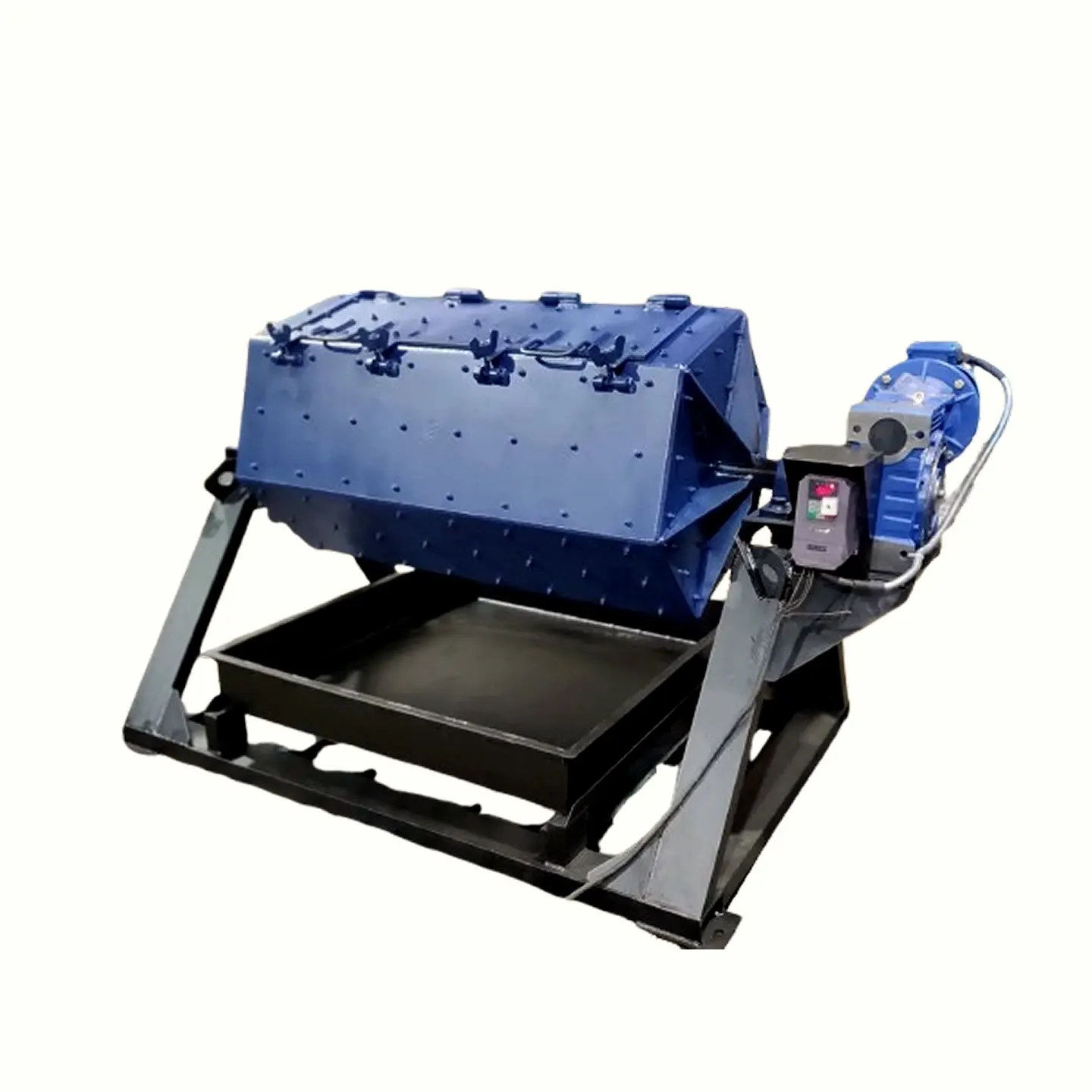
- Tumbling barrel
- Filter unit
- VZ-246 flow cup viscometer (three versions)
- Foundry hand tools
- Personal protective equipment (PPE)
How the plant works
- Make foam patterns on the semi-automatic machine or the CNC machines
- Apply the refractory coating and dry the patterns
- Set the pattern in the flask, fill with dry sand and pour the melt
- Shake out, clean and, where required, machine and paint the parts
What the delivery includes
- Process training: from raw material preparation and molding through to finishing, in theory and in practice.
- Machine training: settings, operating modes and maintenance of the CNC and auxiliary equipment.
- Staff training for process engineers, CNC operators, quality inspectors and foundry workers.
- 12-month equipment warranty, including free repair of any faults.
- Process support at start-up: inspection of every unit and set-up of the production flow.
- Ramp-up to the rated output, with checks on casting and machining quality.
- Handover to full autonomy: process instructions and contacts of vetted material suppliers.
- Supervised installation: assembly, commissioning and a test run on your site.
- Ongoing technical support after production starts.
Delivery is quoted separately depending on the destination.
Frequently asked questions
How much floor area does a 10 t/month plant need?
200-300 m2. The modular layout means the plant fits into a rented building with no capital construction work.
How many heats a day does this package deliver?
Two to three. The package has two furnaces: an 80 kg induction furnace, which is fast and energy-efficient, and a resistance furnace as a back-up.
Can the plant later grow from 10 to 30 tonnes a month?
Yes. The layout is modular: adding furnaces, flasks and further pattern machines takes it to 20-30 tonnes a month without rebuilding the shop.
Request a quote
Send us a drawing or a photo of the part. We will work out the process, the plant configuration and the price.