









Both processes run iron, steel, bronze and aluminum, both work without resin binders, and both return the sand to circulation. What differs is the pattern, the tooling and the kind of parts and batch sizes each one pays off on.
| Parameter | Lost foam (LFC) | V-process |
|---|---|---|
| Pattern | Single-use expanded polystyrene; vaporizes during pouring and stays in the mold | Reusable, made of wood, plastic or metal; withdrawn before pouring |
| Mold | Dry silica sand with no binder, compacted by vibration and held by vacuum | Dry silica sand with no binder between two thermoplastic films, held by vacuum |
| Parting line and cores | No parting line; cores are usually unnecessary — the pattern itself forms internal cavities | Parting line on the pattern plate; internal cavities are made with sand cores |
| Surface quality | Set by the refractory coating on the pattern and by the sand grain size | Set by the film, which copies the pattern — hence its use in art and decorative casting |
| Accuracy | No parting line and no core clearances, so no mismatch between mold halves; the tolerance grade is confirmed against the part drawing | The mold is not deformed during compaction; the tolerance grade is confirmed against the part drawing |
| Batch size | From one-off parts and reverse engineering up to large runs; a die is needed for the foam pattern in series production | From one-off up to medium and large runs; changeover means swapping the pattern plate |
| Alloys | Iron, steel, bronze, aluminum and other non-ferrous alloys | Iron, steel, bronze, aluminum and other non-ferrous alloys |
| Casting size in our configurations | 700×700×700 mm flasks in the automated line; monoblock flasks up to two meters | Flasks up to 1000×1000×800 mm in the 40–50 t/month plant; the horizontal line takes 1400×1400 mm flasks |
| Consumables and cost | Polystyrene, refractory coating, sand in a closed loop; cost per tonne is calculated per part and batch — on request | Film, refractory coating, sand in a closed loop; cost per tonne is calculated per part and batch — on request |
| Separate white shop | Required: pre-expander, MT-400/600/800 pattern machines, pattern drying and coating | Not required; a pattern shop and a core shop are used instead |
How lost foam casting works
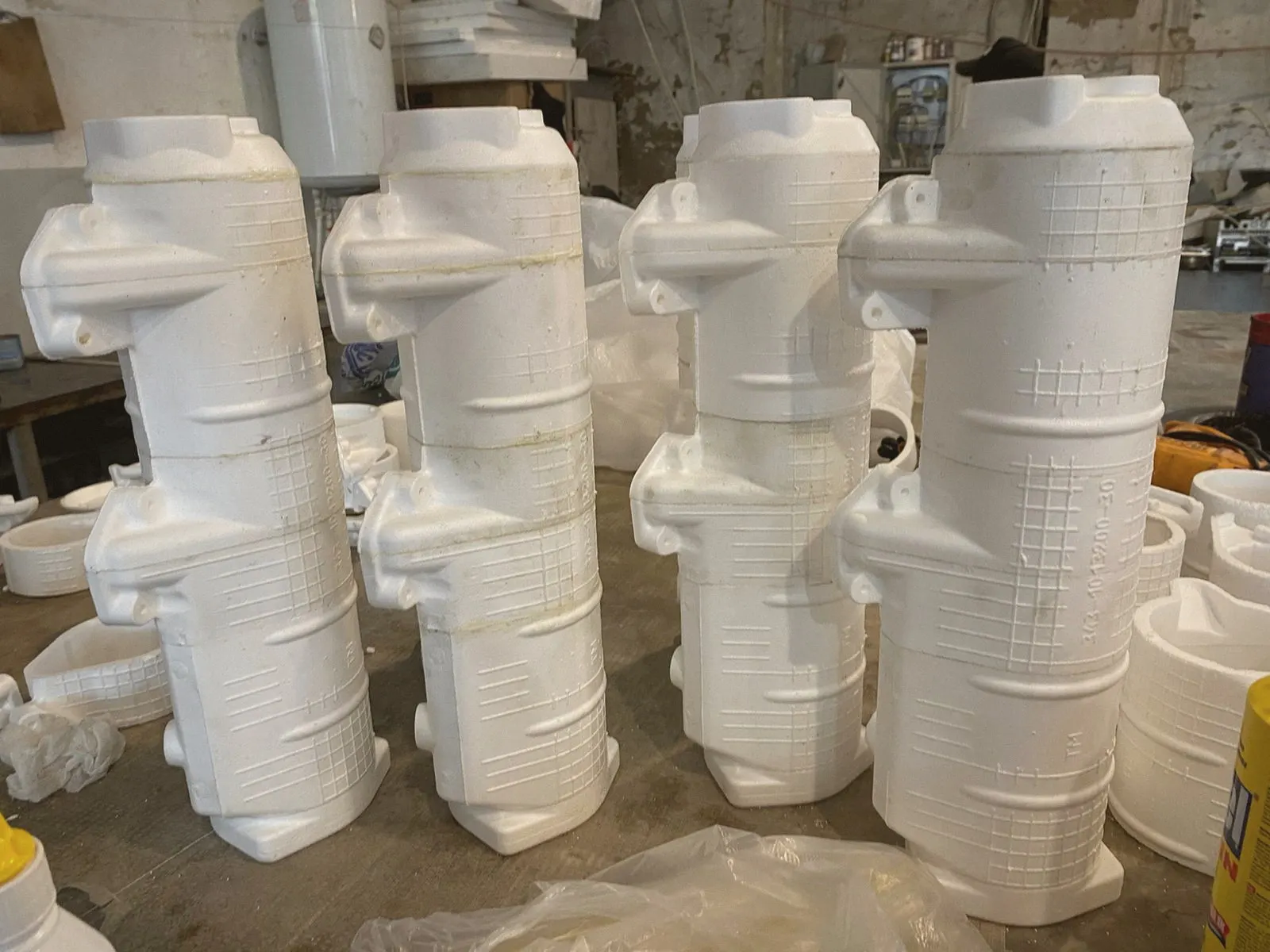
An expanded polystyrene pattern reproduces the geometry of the future part. It is coated with a refractory wash, dried, placed in a flask, buried in dry sand and compacted by vibration. During pouring the metal vaporizes the pattern and takes its place, while the gases escape through the coating into the sand. There is no parting line and, as a rule, no cores, which is why lost foam pays off on housing parts with complex internal cavities and on one-off parts copied from a sample — with no drawings at all.
Lost foam casting: process, equipment, limits →
How the V-process works
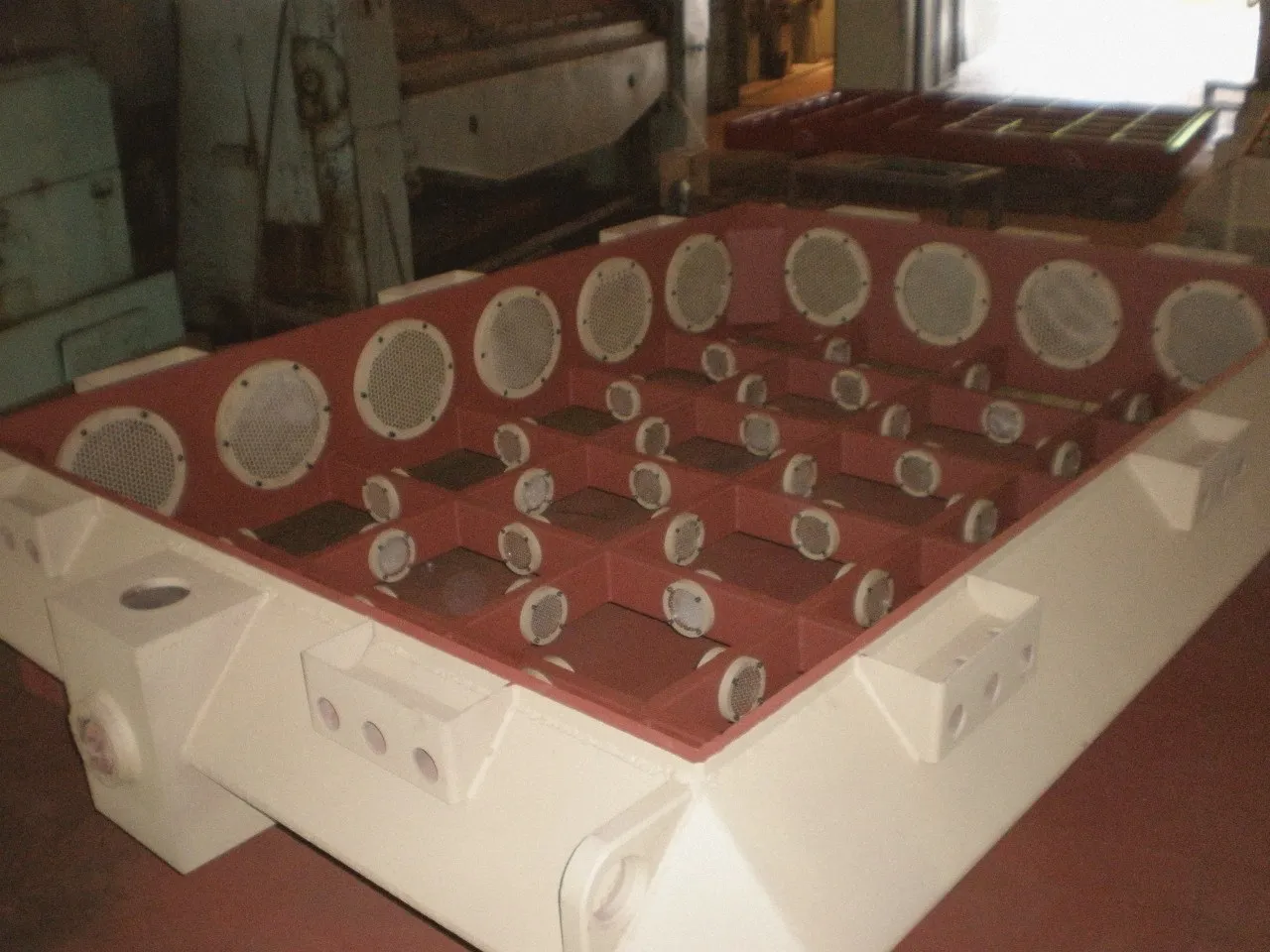
A heated thermoplastic film is drawn down onto the pattern by vacuum applied through the pattern plate. A vacuum flask is set over the film and filled with dry binder-free sand, which is compacted by vibration; a second film closes the top and the vacuum is switched on, so atmospheric pressure squeezes the sand into a rigid mold half. The pattern is withdrawn, the halves are assembled, and the metal is poured with the vacuum held until solidification. The casting surface copies the film, which is why the V-process is the traditional choice for thin-walled, large and decorative castings.
V-process casting: process, equipment, limits →
When to choose which
- Complex internal geometry, undercuts, housing parts — lost foam: the pattern is one piece, so no parting line and no cores.
- One-off parts and reverse engineering from a sample — lost foam: the pattern is cut from a polystyrene block on a CNC machine or by hand, and no expensive tooling is needed.
- Large flat or thin-walled castings, decorative surfaces — V-process: the film gives a clean surface and the process handles large flasks.
- Frequently changing product mix at steady volumes — V-process: the pattern tooling is reusable, so changeover is a pattern plate swap.
- A large run of one part — either process; the decision comes down to tooling cost, a foam pattern die against a pattern plate.
Full lost foam vs V-process comparison with a decision guide →
What we supply for each process
A casting technology is not only a way of making molds but also the equipment around it. For lost foam we supply the white shop: a pre-expander, MT-400, MT-600 and MT-800 semi-automatic pattern machines, AMT-600 and AMT-800 automatic machines, a coating and drying area, and monoblock flasks with a closed sand loop. For the V-process we supply a horizontal line built around a molding carousel with a hopper, a vertical system in both flask and flaskless configurations, and a vacuum crane that carries vacuum to any point of the shop floor.
The melting shop, sand cooling and reclamation, shakeout, tumbling and shot blasting are shared by both processes, so a foundry can start with one technology and add the second later.
Frequently asked questions
What is the difference between lost foam and V-process, in plain terms?
In lost foam the pattern is single-use: a polystyrene copy of the part stays in the sand and is burned away by the incoming metal. In the V-process the pattern is reusable: the cavity it forms is held by film and vacuum, and the pattern is withdrawn before pouring. Everything else follows from that — lost foam needs no parting line and no cores, while the V-process needs no white shop for foam patterns.
Which metals can be cast with lost foam and V-process?
Both processes are designed for iron, steel, bronze, aluminum and other non-ferrous alloys. The limit is set by the melting shop rather than by the molding process: Modern Technologies plants are equipped with thyristor induction furnaces and resistance furnaces sized for the alloy and heat you need.
Which process is cheaper to start with?
A base Modern Technologies foundry plant starts from $98,500. Lost foam is usually the cheaper entry point: a working set begins with one foam pattern machine and one monoblock flask, and capacity is added flask by flask. A horizontal V-process line is a heavier starting position and is chosen when the order book is already known; we price it per configuration.
Can both processes run on the same site?
Yes. Lost foam and V-process molding areas use the same dry binder-free silica sand, the same sand cooling and reclamation system and the same melting shop. Our Unique plant, rated at 40–50 tonnes per month, combines five casting technologies on one site.
How long does it take to start production?
A typical foundry area goes from delivery to the first production casting in 2–3 months. A pattern machine operator is trained in 2–3 days; where in-house specialists are missing, we help find foundry engineers and melters on a contract basis.
Get a quote
Send us a drawing or a photo of the part. We will work out the process, the plant configuration and the price.