









Aluminum profile production mini-plant
- Aluminum profile production mini-plant. The aluminum profile production mini-plant is a compact, full-cycle industrial facility specializing in producing profiles from 6xxx-series alloys (6060, 6063, 6082, and others) by hot extrusion. A typical mini-plant’s output ranges from 1,000 to 5,000 tonnes of finished product a year on a standard shift schedule. The facility occupies a production floor area of 3,000 to 8,000 m².
Main equipment package:
| Equipment name | Quantity | Purpose |
|---|---|---|
| Melting furnace (crucible) | 1-2 units | Production base |
| Hydraulic extrusion press | 1 unit | Profile forming |
| Tooling die set | made to order | Cross-section shape |
| Output table with puller | 1 unit | Receives the hot profile |
| Quenching unit (water/air) | 1 unit | T5/T6 heat treatment |
| Stretcher-leveler | 1 unit | Removes curvature |
| Disc cut-off saw | 1-2 units | Cutting to length |
| Artificial aging furnace | 1 unit | Alloy strengthening |
| Anodizing line (optional) | 1 line | Protective coating |
| Powder coating line (opt.) | 1 line | Decorative coating |
| Overhead/gantry crane | 1-2 units | Billet handling |
| Recirculating water system | 1 set | Press cooling |
| Compressor station | 1 set | Pneumatics, clamps |
| Transformer substation | 1 set | Plant power supply |
| Dust/gas extraction system | 1 set | Environmental, ventilation |
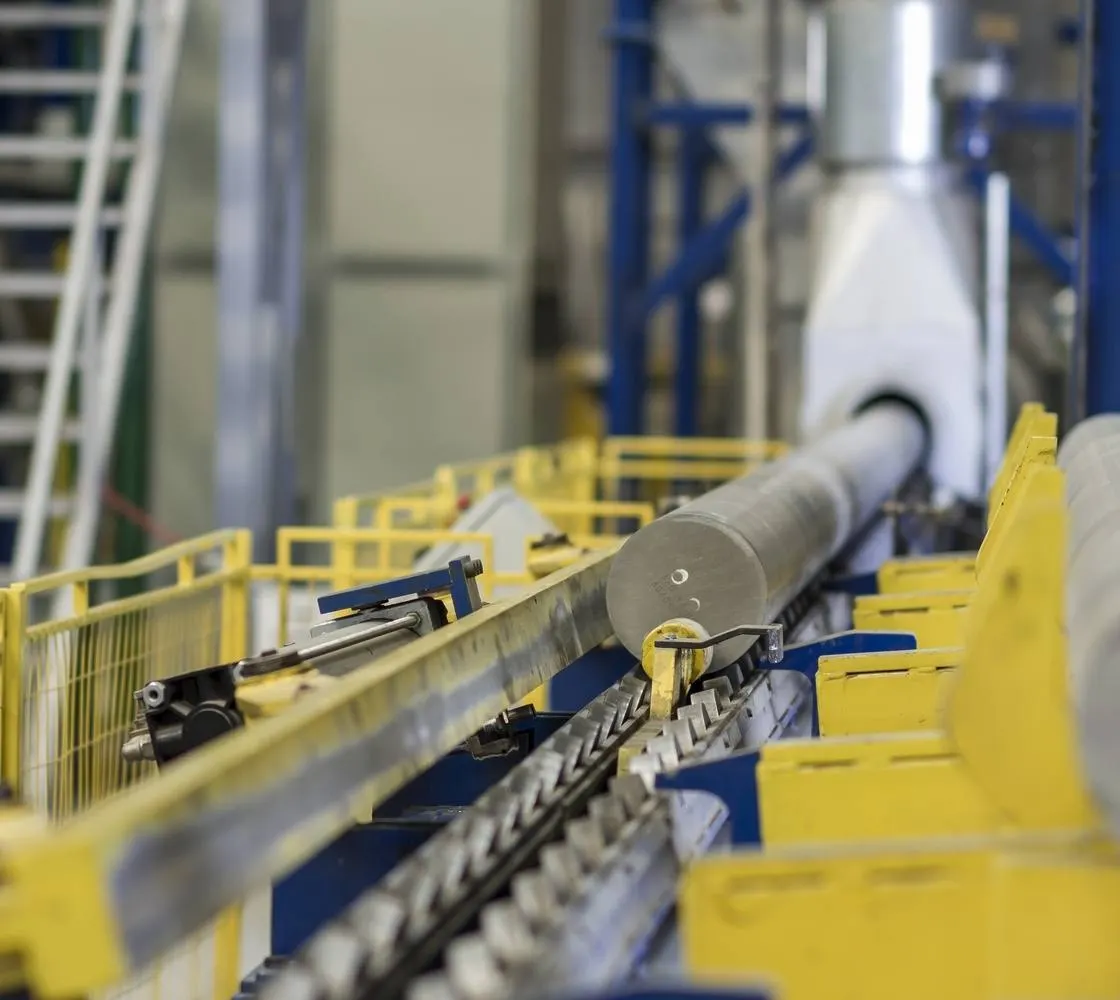
Production process cycle: Feedstock preparation and melting The starting feedstock is cast cylindrical billets 63-203 mm in diameter and up to 600 mm long. Billets can be produced on site in a crucible or induction melting furnace from primary aluminum and scrap, or purchased from specialized foundries. Heating and extrusion Billets are heated in a gas or induction furnace to 450-520°C, then loaded into the hydraulic press container. A press rated at 1,250 to 3,600 tonnes forces the aluminum through a steel die, giving it the required cross-section at a speed of 3-20 m/min depending on profile complexity. Quenching and stretching The hot profile is received on the output table with a puller and quenched with water or air. It is then stretched 0.5-2% on a stretcher-leveler to remove residual stress and curvature. Cutting and aging Disc saws cut the profile to commercial length (up to 7 m). The profile is then loaded into an aging furnace, where artificial aging (T5 or T6 heat treatment) takes place at 175-195°C for 4-8 hours, delivering the required strength of up to 270 MPa. Finishing operations (optional) At the customer’s request, the profile can undergo one or more surface finishing operations: Anodizing - electrochemical deposition of a 10-25 micron oxide film (silver, bronze, black, and others) Powder coating - electrostatic application of polyester powder with polymerization at 180-200°C Machining - milling, drilling, and punching to drawings.
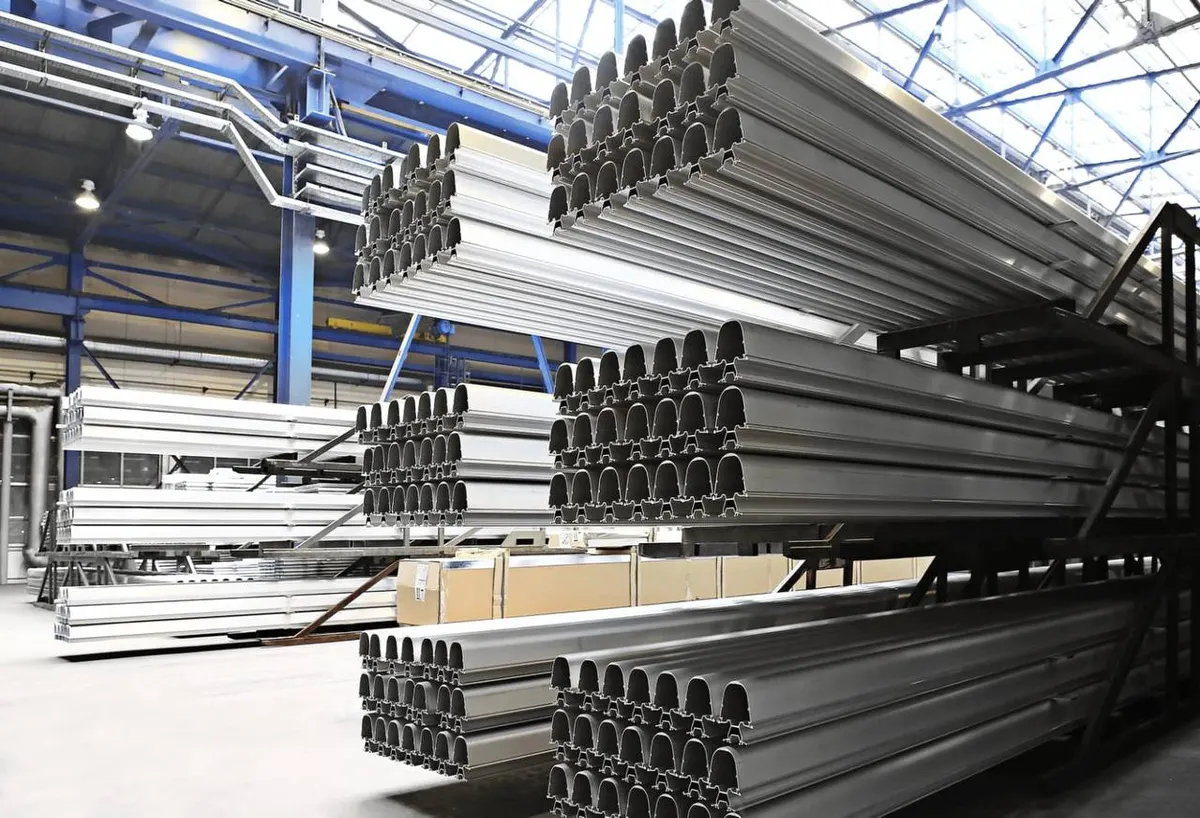
Products manufactured: The plant produces a wide range of aluminum profiles, including:
- Construction and architectural profiles.
- Furniture and radiator items.
- Transport profiles.
- Blanks for further processing.
- Custom items to the customer’s own drawings.
Infrastructure requirements:
- Power supply: 500-2,000 kW of installed capacity (380 V / 10 kV).
- Water supply: a recirculating cooling system with a capacity of 50-200 m³/h.
- Gas supply: natural gas for the melting and heating furnaces.
- Production floor area: 3,000-8,000 m² (ceiling height from 7 m).
- Rail or road access for delivering feedstock and shipping finished product.
- A gas cleaning and dust extraction system compliant with environmental regulations.
Approximate mini-plant parameters:
Parameter;Value Output;1,000-5,000 t/year Press force;1,250-3,600 tf Container diameter;63-203 mm Max. profile length;up to 50 m (before cutting) Equipment set weight;500-2,000 t Installation and start-up time;8-18 months Staff headcount;40-120 people (2-3 shifts) Equipment cost (approx.);$2-15 million
Get a quote
Send us a drawing or a photo of the part. We will work out the process, the plant configuration and the price.