









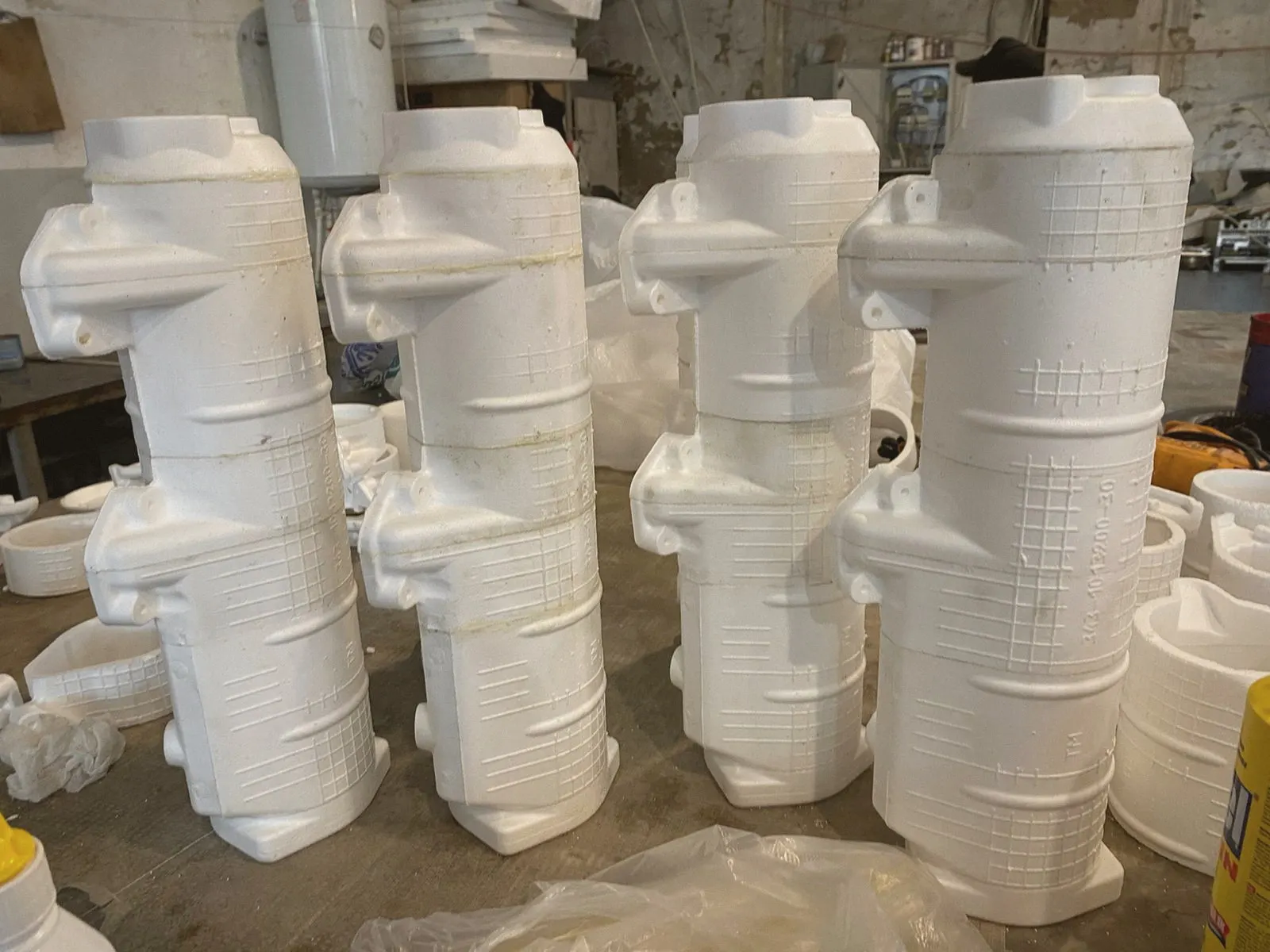
The good news is that the choice does not have to be permanent. Both processes mold in dry binder-free silica sand and hold the mold with vacuum, so in one shop they share the sand loop, the reclamation system and the melting and finishing areas — the second process can be added later.
| Criterion | Lost foam (LFC) | V-process |
|---|---|---|
| Entry cost | Lower: start with one foam pattern machine and one monoblock flask | Higher: a molding line with carousel, a vacuum station and pattern tooling are all needed up front |
| Tooling for a new part | A foam pattern die built by a simplified route; a one-off part needs no tooling — the pattern is cut from a block | A reusable pattern plate for every part; after that, changeover takes minutes |
| Batch of 1–50 pieces | Ideal: the pattern is cut from a polystyrene block, including from a sample without drawings | Uneconomic: a pattern plate does not pay off at this volume |
| Batch of 100–1,000 pieces | Economic once the foam pattern die exists | Economic: the pattern plate pays off and the cycle is stable and repeatable |
| Large runs | AMT-600 and AMT-800 automatic machines: 20–30 closings per minute | Mechanized line with a molding carousel; the vertical system is built for automation |
| Complex internal cavities | A strength: the pattern is one piece and cores are usually unnecessary | Sand cores and a core shop are required |
| Large flat or thin-walled parts | Limited by flask size and by the strength of the foam pattern | A strength: flasks up to 1000×1000×800 mm, and 1400×1400 mm on the horizontal line |
| Surface quality | Set by the refractory coating on the pattern and by the sand grain size | Set by the film; hence its use in art and decorative casting |
| Labor | One operator per pattern machine, trained in 2–3 days; pattern drying and coating schedules are critical | The molder works with film and vacuum; vacuum discipline is critical |
| Consumables per casting | Polystyrene and refractory coating | Film and refractory coating |
| Building | A separate white shop is required: pre-expansion, molding, drying, coating | A pattern shop and a core shop are required; the 40–50 t/month plant occupies from 400 m² |
| Sand and reclamation | Dry binder-free silica sand, closed loop inside the monoblock flask | Dry binder-free silica sand, closed loop |
Choose lost foam if
- The product mix is dominated by housing parts with complex internal cavities and undercuts: a one-piece foam pattern removes both the parting line and the cores.
- You need reverse engineering: discontinued parts, scarce spares, work from a sample with no drawings. The pattern is cut from a polystyrene block, so no expensive tooling is involved.
- The starting budget is limited and capacity has to grow module by module: every monoblock flask is independent, so the line expands without stopping.
- You expect a broad and shifting mix of small and medium runs, where each new part has to be cheap in tooling.
Choose the V-process if
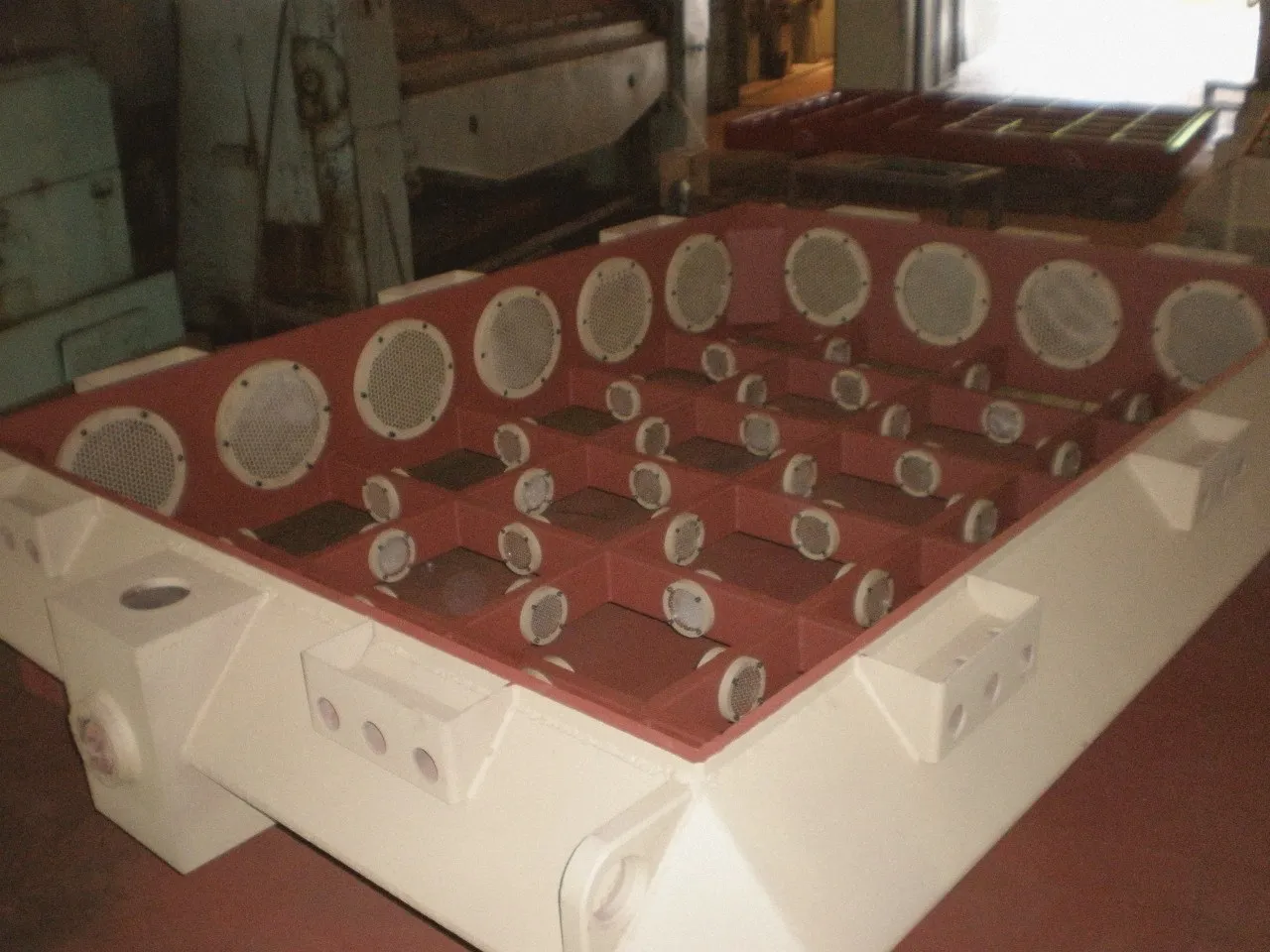
- Parts are large, flat or thin-walled: flasks up to 1000×1000×800 mm in the plant package and up to 1400×1400 mm on the horizontal line.
- Surface quality matters: the film copies the pattern, so the part goes on without rough machining and fine relief is reproduced — hence art and decorative casting.
- The product mix is stable and volumes are predictable: a reusable pattern plate pays off and gives fast changeover.
- Resin binders are unwelcome in the shop: the V-process has none at all, and shakeout is simply switching the vacuum off.
Run both if
- Orders split into two groups: housing parts with complex internal geometry, and large flat castings.
- You want a hedge on utilization: while one process waits for orders, the other keeps running.
- Growth is planned: start with one process and add the second onto infrastructure that already exists.
What the two processes share
Comparisons are often framed as if the choice were irreversible. In practice lost foam and the V-process have more in common than not, and what they share is precisely the capital-heavy part of a foundry:
- The molding medium. Dry binder-free silica sand in both processes. One sand, one store, one pneumatic transport system.
- Sand cooling and reclamation. A single closed loop serves both molding areas.
- Vacuum. Both processes hold the mold by pressure difference, so they use one vacuum station.
- The melting shop. Thyristor induction and resistance furnaces do not care how the mold was made: iron, steel, bronze and aluminum are equally available to both.
- Finishing. Fettling, tumbling, shot blasting, machining and painting are shared.
Only the pattern-making area and the molding station itself differ. That is why going from one process to two costs far less than building a second foundry.
Common mistakes when choosing
- Choosing the process before the product mix. First the list of parts with sizes, weights, alloys and planned batch runs — then the process. A ranking without a technical specification is meaningless.
- Costing only the equipment. Building, power, ventilation, wages until break-even and a reserve for the unexpected often outweigh the difference in line price.
- Overlooking the white shop. In lost foam, foam pattern production is a separate area with its own floor space, heating and ventilation; it cannot be bolted on afterwards.
- Underestimating vacuum in the V-process. The vacuum station, receivers and distribution are part of the process, not an accessory.
- Building a foundry instead of a product. The businesses that last are those making an end product under their own brand, not selling “castings in general”.
Status of this comparison
The table and recommendations above record process differences taken from Modern Technologies internal engineering material and from the configurations of the equipment we supply. This is not an independent comparative trial: specific figures for accuracy, surface finish, yield and cost are confirmed by calculation and by a trial casting of your part. We produce the trial casting on our own or equivalent equipment and hand it over together with a cost calculation for series production.
Frequently asked questions
Which is cheaper to set up, lost foam or the V-process?
Lost foam is usually cheaper to enter: the minimum working configuration is one foam pattern machine, one monoblock flask and a melting area, and capacity then grows flask by flask. The V-process needs a molding line, a vacuum station and pattern tooling from day one. A base Modern Technologies foundry plant starts from $98,500; the exact figure is calculated per configuration and product mix.
Which process is more accurate?
The two remove different sources of error. Lost foam has no parting line and, as a rule, no cores, so there is no mismatch between mold halves, no core clearance and no flash along the parting line. The V-process mold is not deformed during compaction, and the film allows minimal draft angles. The dimensional tolerance grade is confirmed against the drawing of the specific part and fixed in the technical specification: there is no universal ranking of one being more accurate than the other.
Which suits a batch of 100 pieces, and which a batch of 10,000?
At 100 pieces tooling cost decides. If the part is simple and the tooling already exists, either process works; if there is no tooling, lost foam wins because the pattern can be cut from a block. At 10,000 pieces the cycle decides: this is where AMT-600/AMT-800 pattern machines or a mechanized V-process line with a molding carousel come in, and the choice is driven by the geometry of the part rather than by the volume.
Can both processes run on the same site?
Yes, and it is a common arrangement. Both mold in dry binder-free silica sand, so they share the sand loop, the sand cooling and reclamation system and the melting and finishing areas. Our Unique plant, rated at 40–50 tonnes per month, combines five casting technologies on one site; more often, a foundry starts with one process and adds the second as the product mix grows.
How do consumables and labor requirements differ?
Lost foam consumes polystyrene and refractory coating, and the critical variables are the expansion, drying and coating schedules: a pattern machine operator is trained in 2–3 days, but the white shop needs a properly trained process engineer. The V-process consumes film and refractory coating, and the critical variable is vacuum discipline — losing vacuum means losing the mold. The sand is the same in both cases and circulates in a closed loop.
Get a quote
Send us a drawing or a photo of the part. We will work out the process, the plant configuration and the price.