









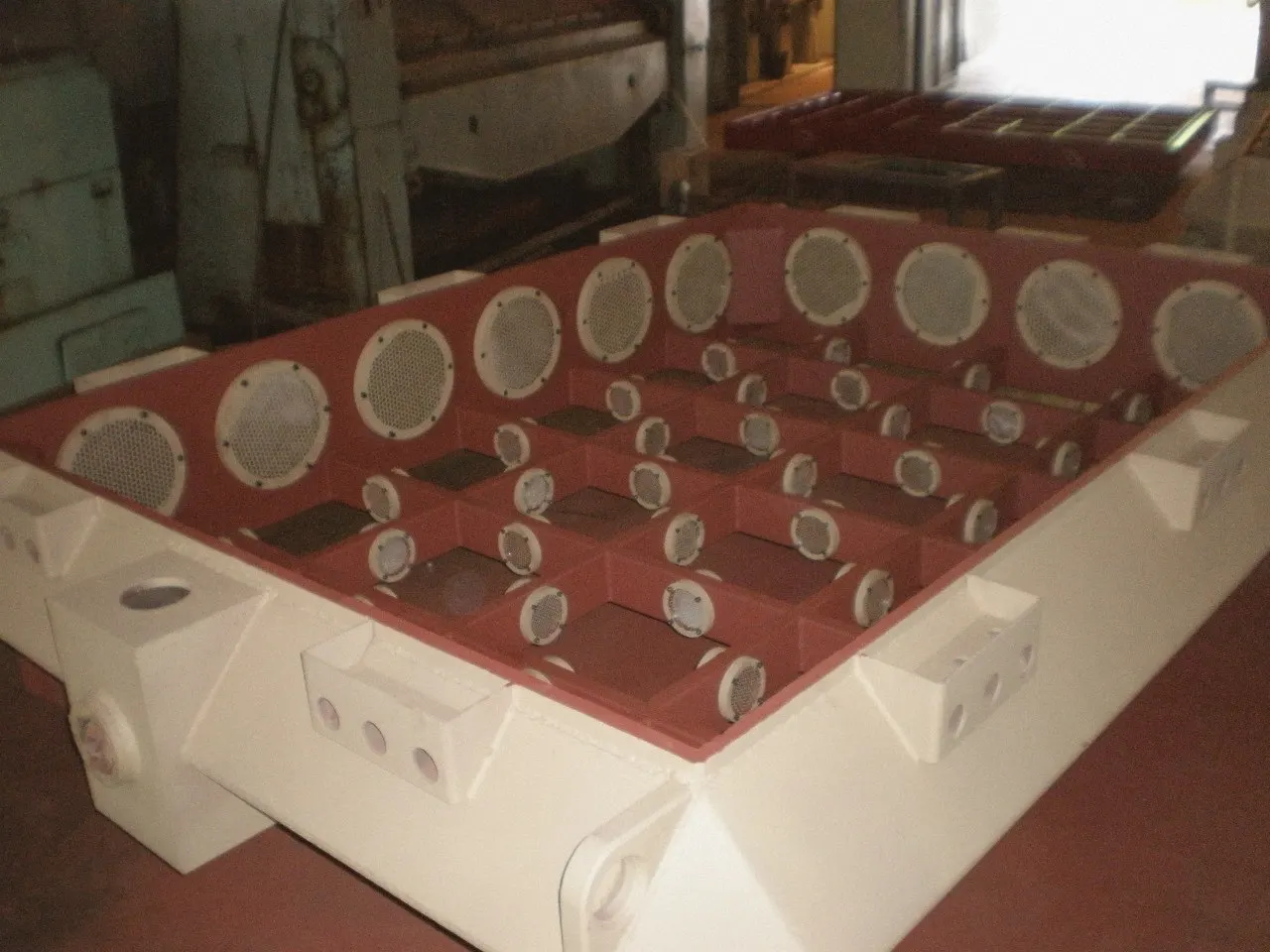
The casting surface copies the film, which is why the V-process is the traditional choice for thin-walled, large and decorative castings. Modern Technologies supplies horizontal and vertical V-process lines of its own design, vacuum flasks, and a complete plant rated at 40–50 tonnes per month.
The V-process, step by step
- Pattern plate preparation. A reusable wood, plastic or metal pattern is mounted on a vacuum plate with vent holes.
- Film heating. A thin thermoplastic film is heated until it becomes pliable.
- Drawing down onto the pattern. The film is lowered onto the pattern and vacuum is applied through the plate — the film seats tightly and reproduces the relief.
- Flask placement and sand fill. A vacuum flask is set on the plate and filled with dry binder-free silica sand, compacted by vibration. On the Modern Technologies horizontal line this operation is performed by the molding carousel with a hopper — the unit that solves the central problem of the V-process: fast, consistent mold making.
- Second film and flask vacuum. A second film closes the top of the flask and the vacuum is switched on. Atmospheric pressure squeezes the sand and the mold half becomes rigid.
- Pattern withdrawal. The vacuum in the pattern plate is released and the pattern is drawn out — the cavity stays under the film. The pattern goes on to the next cycle: it is reusable.
- Mold assembly. The halves are closed, cores are set where the part needs them, and a refractory coating is applied to the film if the alloy calls for it.
- Pouring under vacuum. The metal is poured with vacuum held in both halves: the film burns away while the sand stays compressed until the casting solidifies.
- Shakeout and reclamation. The vacuum is switched off and the mold collapses by itself, with no shakeout grid. The sand is cooled, screened and returned to circulation; the casting goes to fettling, tumbling, shot blasting and machining.
Equipment for a V-process line
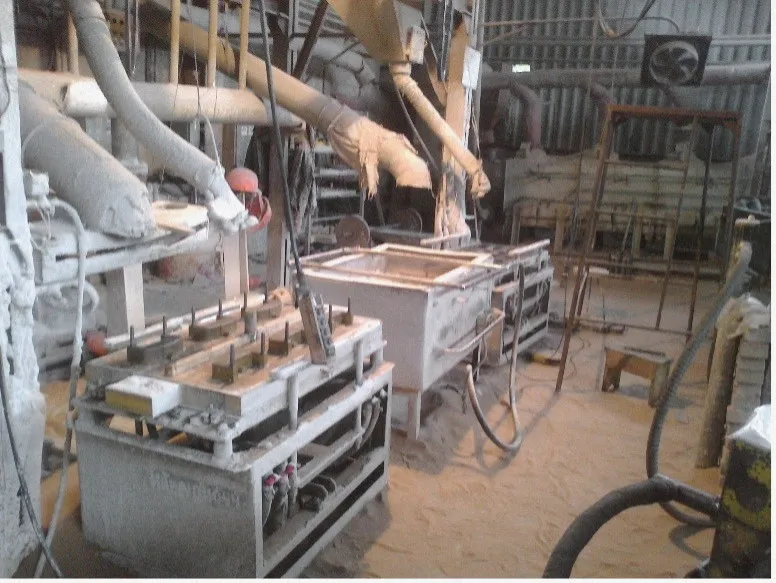
The horizontal line. The mechanized molding line is built around a molding carousel with a hopper — a Modern Technologies design. The line is aimed at the lowest possible casting cost and works with 1400×1400 mm flasks, a size that used to be available only to large industrial plants. Its circuit includes a dedicated vacuum crane that carries vacuum to any point of the shop floor, removing the need for fixed distribution at every station.
The vertical system. The Modern Technologies vertical V-process system works in both flask and flaskless configurations. This is a rare arrangement for vacuum sealed molding, and it is what opens the way to flexible automation: stations can be arranged in line and synchronized with pouring.
The 40–50 t/month V-process plant. The package includes the mechanized molding line and its carousel, flasks up to 1000×1000×800 mm, a core shop, a wood milling machine for pattern tooling, a 500 kg thyristor induction furnace and a resistance furnace, casting ladles, a tumbling drum, an overhead dead-end shot blasting machine, a viscometer, filters, foundry hand tools and personal protective equipment. The plant occupies from 400 m² and covers the full cycle: casting, machining, painting and quality control.
What the V-process gives you
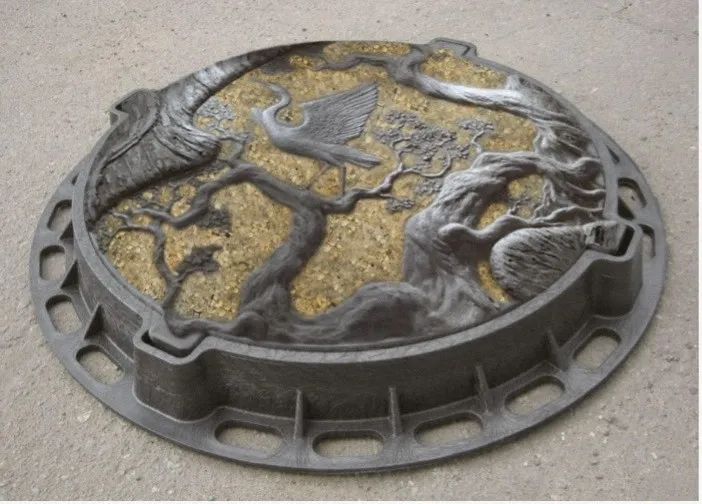
- A surface set by film. The casting copies the film rather than the sand grain — hence its use in art and decorative casting.
- Zero binders. Dry silica sand with no resins: cheaper consumables, simpler reclamation, cleaner air on the shop floor.
- Simple shakeout. Switching the vacuum off destroys the mold — no shakeout grids and no impact loads.
- Long tooling life. Sand never touches the pattern: there is always film between them, so the pattern does not wear.
- Fast changeover. Changing the part means changing the pattern plate, not reworking the process.
- Large sizes. Flasks up to 1000×1000×800 mm in the plant package and up to 1400×1400 mm on the horizontal line.
Limitations of the V-process
- The molding cycle is longer than in green sand: heating, laying and drawing down the film all take time.
- Vacuum is critical: pumps, receivers and distribution are required, and losing vacuum means losing the mold.
- Internal cavities can only be made with cores, so a core shop is required.
- Every part needs reusable pattern tooling.
- Film is consumed on every mold half, and dry sand has to be cooled and de-dusted.
If the product mix consists of housing parts with complex internal cavities, compare the V-process with lost foam casting: lost foam or V-process — which to choose.
Parts cast with the V-process
Flat and thin-walled housings, valve and fitting bodies, parts for mechanical engineering, construction and agricultural machinery, large plates and frames, and art and decorative castings — manhole covers, railings and street furniture elements. The alloys are the same as in lost foam: iron, steel, bronze, aluminum and other non-ferrous alloys.
Frequently asked questions
What is the V-process and how does it differ from green sand and no-bake?
In green sand the mold is held by clay and compaction; in no-bake (cold-setting) systems it is held by a resin binder. In the V-process there is no binder at all: dry silica sand is trapped between two films and the mold is held by a pressure difference. Three things follow — no spend on resins or on reclaiming them, no emissions from curing, and shakeout reduced to switching the vacuum off, at which point the mold collapses on its own.
What surface and accuracy does the V-process give?
The casting surface copies the film rather than the grain of compacted sand, so the V-process is chosen where a part goes on without rough machining or carries a decorative relief. Draft angles are minimal: the film separates sand from pattern, so the pattern draws without scuffing. The dimensional tolerance grade is confirmed against the drawing of the specific part — it depends on size, alloy and mold layout, so we fix it in the technical specification rather than in marketing copy.
Which castings suit the V-process?
Thin-walled and large parts, flat housings, decorative and art castings, and parts with a large surface area. The Modern Technologies V-process plant rated at 40–50 tonnes per month works with flasks up to 1000×1000×800 mm and is aimed at mechanical engineering, construction and agricultural machinery; the horizontal line takes 1400×1400 mm flasks.
What are the disadvantages of the V-process?
The molding cycle is longer than in green sand: the film has to be heated, laid and drawn down. Vacuum has to be continuous — pumps, receivers and shop distribution are part of the process, and losing vacuum means losing the mold. Internal cavities have to be made with cores, so a core shop is required. Every part needs reusable pattern tooling, film is consumed on every mold half, and the dry sand has to be cooled and de-dusted.
Are cores used, and is a core shop needed?
Yes, cores are standard practice in the V-process, and the 40–50 t/month plant includes a core shop in its scope of supply. This is exactly where the V-process differs from lost foam, where the polystyrene pattern itself forms the internal cavities and cores are usually unnecessary.
Get a quote
Send us a drawing or a photo of the part. We will work out the process, the plant configuration and the price.