








Turnkey plastic waste-to-pellet recycling mini-plant
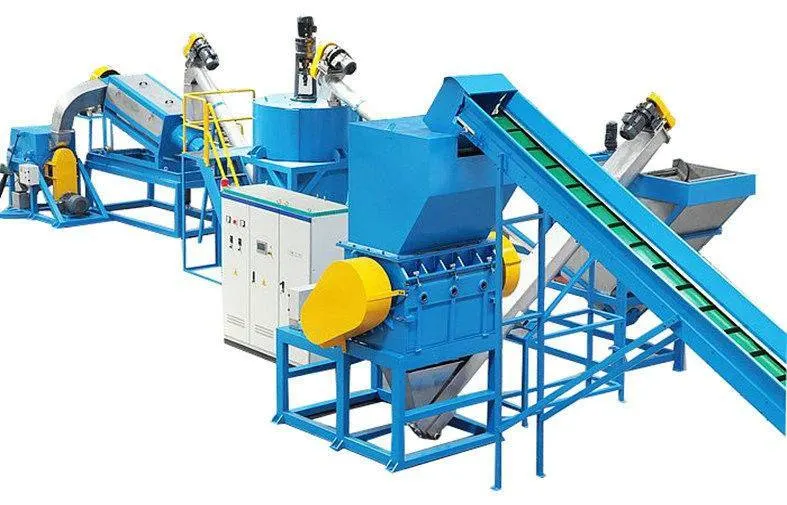
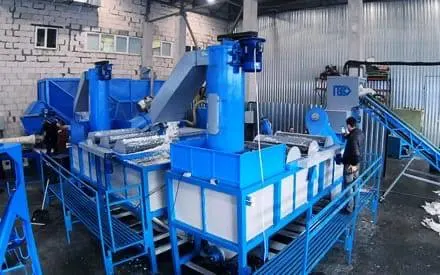
- The plastic waste-to-pellet recycling mini-plant is a compact production solution designed to turn recycled plastic (PET, PP, PE, and others) into a commercial feedstock suitable for subsequent use in molding and extrusion processes.
Process flow diagram: Feedstock preparation The incoming waste is sorted by plastic type and degree of contamination. Shredding Material is shredded to a 10-20 mm fraction using a shredder or knife mill. Cleaning Comprehensive washing (cold/hot, including friction washing) to remove dirt, labels, and organic contamination. Drying Sequential processing in a centrifuge to remove most of the moisture, then a thermal dryer to reach the required residual moisture level. Melt processing Melting the prepared feedstock in an extruder (single- or twin-screw) with simultaneous melt filtration through a screen or automatic filter. Pellet forming Pelletizing the melt using a water-ring or strand pelletizer. Finishing Cooling the finished recycled pellets and then packaging them for storage or transport.
Mini-plant equipment package:
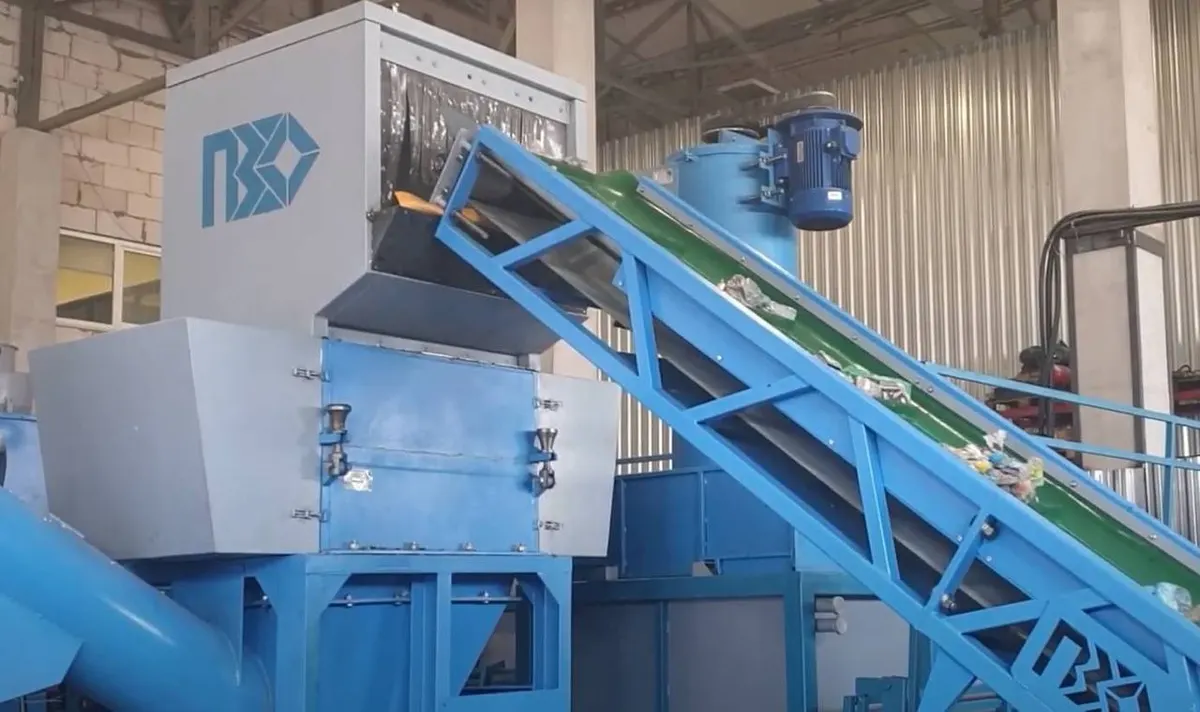
- Feedstock feed subsystem (belt or vibrating conveyor).
- Sorting station (sorting table).
- Shredding unit.
- Washing line (tanks, friction washer).
- Drying modules (centrifuge, thermal dryer).
- Main processor (extruder).
- Melt filtration system (filter).
- Pelletizing unit (pelletizer).
- Finished product storage (hoppers, silos).
- Closed-loop air and water cleaning system.
Types of plastic processed:
- Polyethylene (PE) - a versatile material used for film and canisters.
- Polypropylene (PP) - used for bags and crates thanks to its high strength.
- PET (polyethylene terephthalate) - the main material for plastic bottles.
- Polystyrene (PS) and ABS - used for housings of various items thanks to their lightness and strength. Pelletizing formats:
- Water-ring pelletizing - the optimal choice for processing soft and contaminated materials.
- Strand pelletizing - designed for working with cleaner feedstock.
- Underwater pelletizing - used when highly uniform pellets are required.
Key line parameters:
- Output - ranges from 100-150 kg/h to 500-1,000 kg/h depending on configuration.
- Power consumption - depends on the type of equipment and the level of feedstock contamination.
- Automation - can range from semi-automatic to a fully automated system.
- Staff - operating the line requires 3-6 people per shift. Additional options:
- Film agglomerator - improves recycling efficiency for thin-walled materials.
- Metal detectors - remove metal contaminants from the feedstock.
- Additive dosers - allow dyes and stabilizers to be introduced during processing.
- Compounding line - used for blending different plastics and modifiers.
Recycled pellets: production and use The mini-plant’s end product is recycled pellets, which have a wide range of applications across industries. These pellets are suitable for:
- Injection molding.
- Pipe and profile extrusion.
- Producing film materials.
- Making technical items. Setting up such a mini-plant makes sense where there is a stable supply of plastic feedstock. The project’s core profitability comes from several key factors:
- First, the gap between the low cost of raw plastic waste and the higher price of finished recycled pellets.
- Second, the depth of feedstock cleaning plays an important role, directly affecting the quality of the final product.
- Third, consistent product quality secures steady demand and helps build a loyal customer base. In short, a plastic recycling mini-plant is a promising business line when the production process is properly organized.
Get a quote
Send us a drawing or a photo of the part. We will work out the process, the plant configuration and the price.