









| Output | up to 50 t/month (600 t/year) |
|---|---|
| Processes | lost foam casting (LFC) and V-process |
| Metals | iron, steel |
| Flask size | 700x700x800 mm |
| Molding line | mechanized, ten 700x700x700 mm flasks |
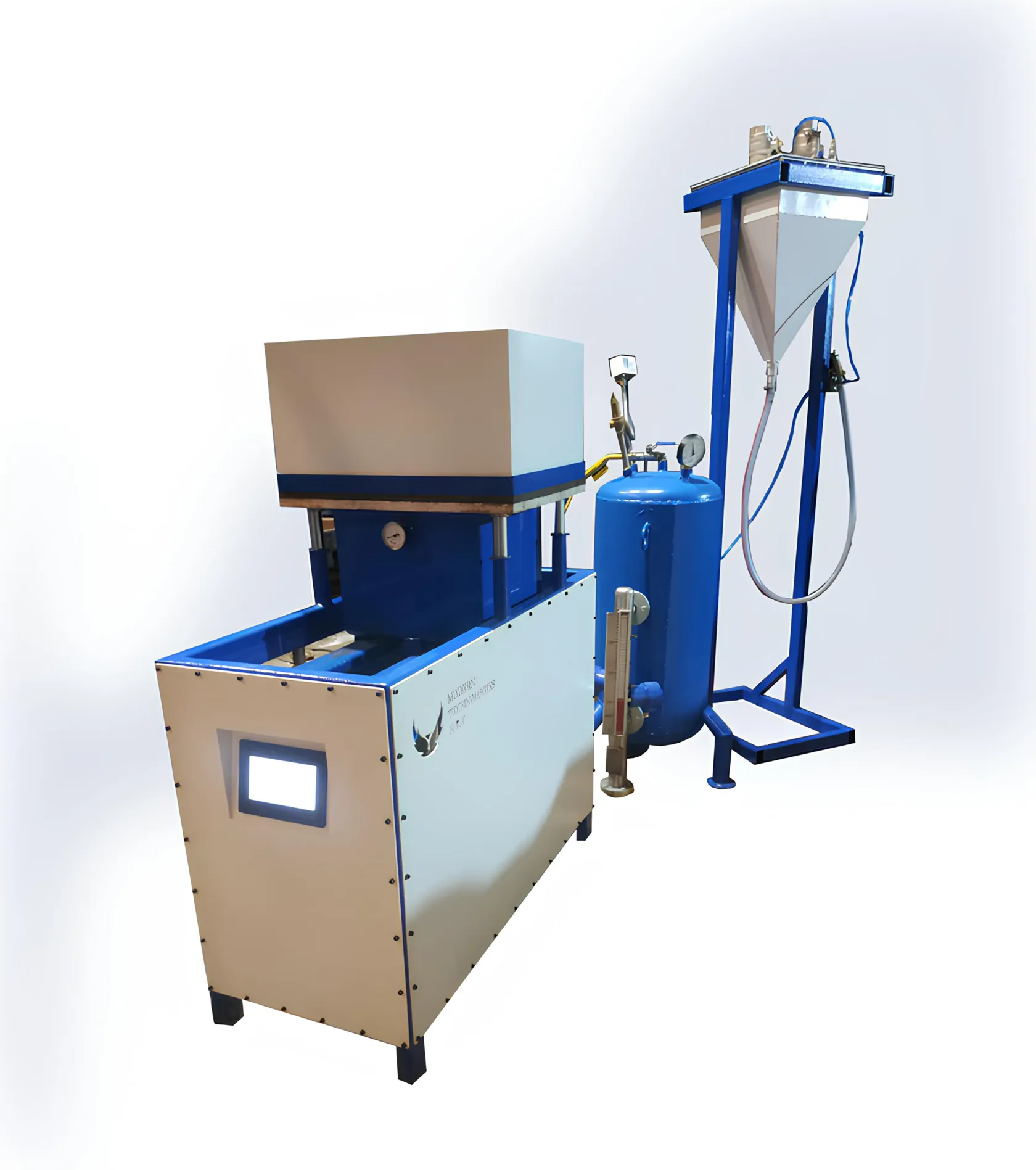
| Melting | 500 kg thyristor induction furnace assembly plus resistance furnace |
| Pattern shop | three PA-400 semi-automatic machines with pre-expander, bead blowing unit |
| Casting cleaning | tumbling barrel, overhead dead-end shot blasting machine, chamber electric furnace |
| Quality control | metal analysis laboratory, pentane meter, viscometer |
| Floor area | 300-600 m2 |
| Includes | foundry cell, machining, painting and quality control |
What this configuration gives you
A full cycle on one site. The package includes the foundry cell, machining, painting and quality control - from foam pattern to finished, painted part.
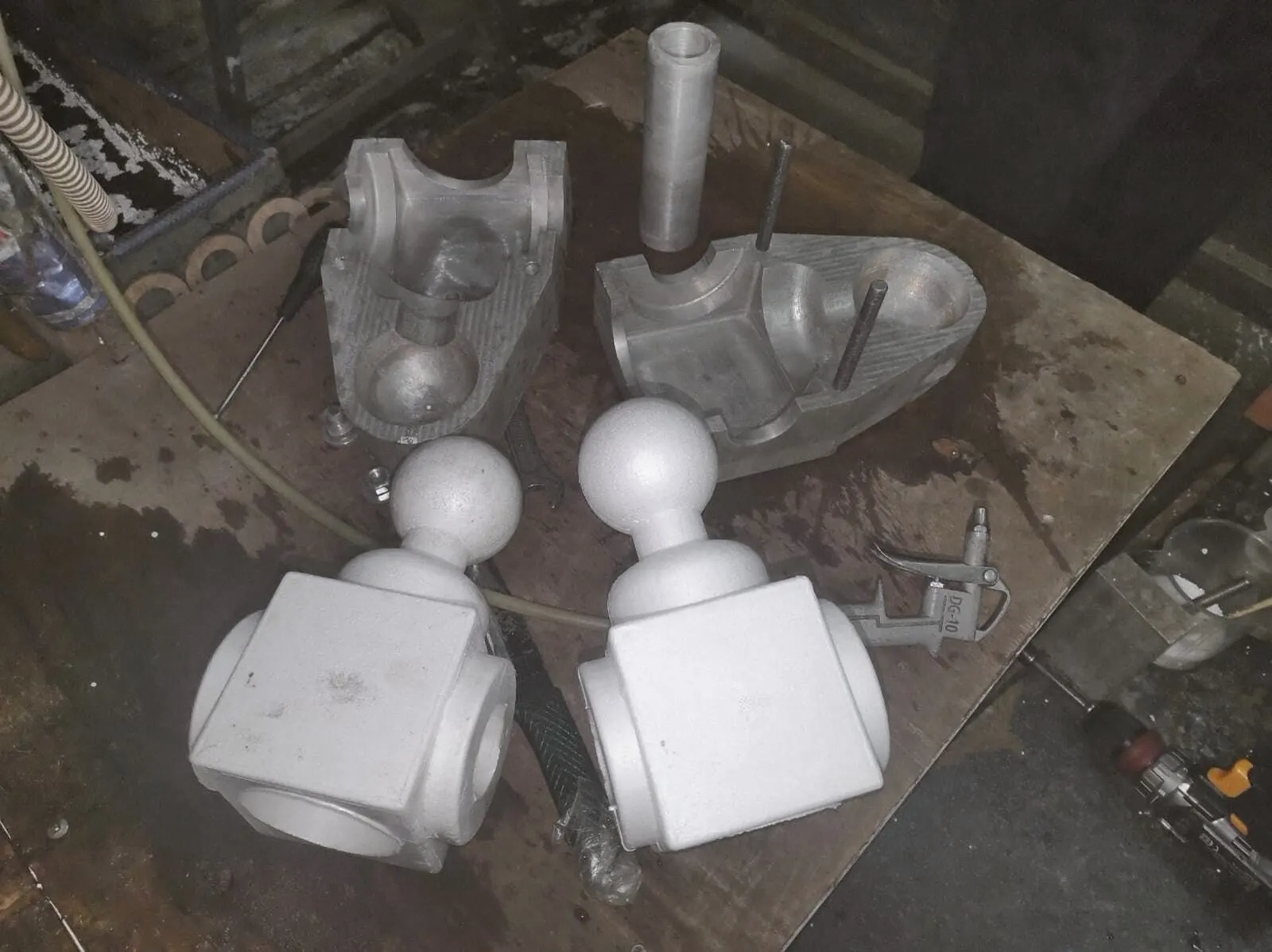
Accuracy and surface finish. Mechanized molding gives a repeatable impression, and lost foam casting and the V-process remove the need for split tooling, so castings come out with a smooth surface and accurate geometry.
A flexible product range. Changing the part means changing the foam pattern, not retooling the line.
Low labor input. Mechanized molding cuts the share of manual work, and with it the wage cost per tonne of product.
Who it suits
- Producers of heavy, complex shaped iron and steel castings.
- Engineering and repair plants with a wide product range.
- Companies that need to reach batch volumes quickly.
What is included
- Mechanized molding line with ten 700x700x700 mm flasks
- 500 kg thyristor induction furnace assembly
- Resistance furnace
- PA-400 semi-automatic pattern machine with pre-expander (3 units)
- Bead blowing unit
- Drying cabinet
- Dissolver for refractory coating
- Casting ladle
- Foam milling machine
- Hot-wire cutting machine
- Tumbling barrel
- Overhead dead-end shot blasting machine
- Bogie-hearth chamber electric furnace
- Laboratory unit for chemical analysis of heats
- Pentane meter
- Filter unit
- Viscometer
- Foundry hand tools
- Personal protective equipment (PPE)
How the plant works
- Make foam or wax patterns
- Set the patterns into the flasks on the mechanized line
- Pour the melt and hold the slow-solidifying castings in the mold
- Take out accurate shaped parts
- Machine, paint and inspect
What the delivery includes
- Process training: from raw material preparation and molding through to finishing, in theory and in practice.
- Machine training: settings, operating modes and maintenance of the CNC and auxiliary equipment.
- Staff training for process engineers, CNC operators, quality inspectors and foundry workers.
- 12-month equipment warranty, including free repair of any faults.
- Process support at start-up: inspection of every unit and set-up of the production flow.
- Ramp-up to the rated output, with checks on casting and machining quality.
- Handover to full autonomy: process instructions and contacts of vetted material suppliers.
- Supervised installation: assembly, commissioning and a test run on your site.
- Ongoing technical support after production starts.
Delivery is quoted separately depending on the destination.
Frequently asked questions
What are slow-solidifying castings and why do they need a dedicated line?
They are heavy castings that need a long time to solidify inside the mold. A mechanized line with a large number of flasks - ten of 700x700x700 mm - keeps molds in circulation while the metal sets, so output never stops.
How much floor area does this plant need?
300-600 m2, which covers the foundry cell, machining, painting and quality control.
How does it differ from the 100 t/month configuration?
By flask size and furnace. Here it is ten 700x700x700 mm flasks and a 500 kg furnace; the 100 t/month plant has five 1250x1450x800 mm flasks and a 1000 kg furnace.
Request a quote
Send us a drawing or a photo of the part. We will work out the process, the plant configuration and the price.