









| Output | 25-30 t/month (300-360 t/year) |
|---|---|
| Process | lost foam casting (LFC) |
| Metals | iron, steel, non-ferrous alloys |
| Melting | 250 kg thyristor induction furnace plus resistance furnace |
| Molding | 2x1x1 m monoblock unit with controlled sand compaction |
| Pattern shop | three MT-400 semi-automatic machines and a bead blowing unit |
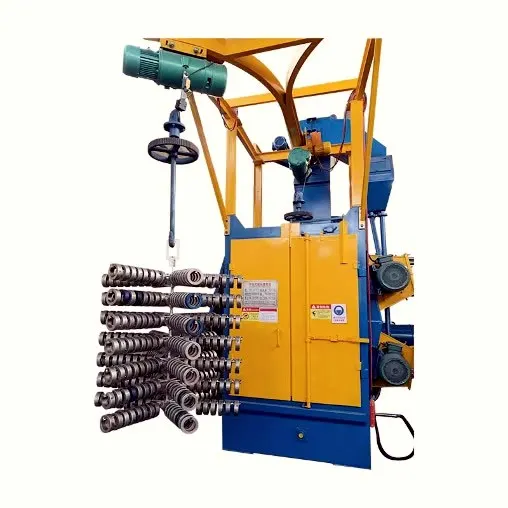
| Casting cleaning | tumbling barrel, overhead dead-end shot blasting machine, bogie-hearth chamber furnace |
| Quality control | metal analysis laboratory, pentane meter, viscometer |
| Installed power | 284.3 kW |
| Lead time | 2-3 months |
What this configuration gives you
Controlled molding. Monoblock units replace manual work with flasks and compact the sand evenly - the decisive factor in mold quality.
Higher output. Three pattern machines and a 250 kg induction furnace deliver 25-30 tonnes of castings a month: volume production without losing quality.
Fast, powerful melting. The 250 kg furnace shortens the cycle, and paired with the resistance furnace it lets you switch between different metals.
Complete casting cleaning. A tumbling barrel for basic cleaning, a shot blasting machine for thorough surface treatment and an electric furnace for heat treatment that improves mechanical properties.
Extended quality control. The metal analysis laboratory, the pentane meter, the viscometer and accurate molding on monoblock units together produce parts with consistent properties.
Who it suits
- Plants with high, steady demand for cast parts.
- Companies that need casting quality controlled at every stage.
- Investors looking for a scalable asset with predictable utilization.
What is included
- 2x1x1 m monoblock molding unit
- Monoblock flask unit with one flask
- 250 kg thyristor induction furnace
- Resistance furnace
- MT-400 semi-automatic foam pattern machine (3 units)
- Bead blowing unit
- Drying cabinet
- Dissolver for refractory coating
- Casting ladle
- Foam milling machine
- Hot-wire foam cutting machine
- Tumbling barrel
- Overhead dead-end shot blasting machine
- Bogie-hearth chamber electric furnace
- Laboratory unit for chemical analysis of heats
- Pentane meter
- Filter unit
- VZ-246 flow cup viscometer (three versions)
- Foundry hand tools
- Personal protective equipment (PPE)
How the plant works
- Make foam patterns on three semi-automatic machines in parallel
- Blow, coat and dry the patterns
- Mold in the monoblock unit with even sand compaction
- Melt in the 250 kg induction furnace and pour
- Tumble, shot blast, heat treat and inspect
What the delivery includes
- Process training: from raw material preparation and molding through to finishing, in theory and in practice.
- Machine training: settings, operating modes and maintenance of the CNC and auxiliary equipment.
- Staff training for process engineers, CNC operators, quality inspectors and foundry workers.
- 12-month equipment warranty, including free repair of any faults.
- Process support at start-up: inspection of every unit and set-up of the production flow.
- Ramp-up to the rated output, with checks on casting and machining quality.
- Handover to full autonomy: process instructions and contacts of vetted material suppliers.
- Supervised installation: assembly, commissioning and a test run on your site.
- Ongoing technical support after production starts.
Delivery is quoted separately depending on the destination.
Frequently asked questions
Why is a monoblock unit better than separate flasks?
It compacts the sand evenly and under control. Compaction directly determines the geometric accuracy of the casting and the scrap rate at the molding stage.
Why is the power draw higher than on the 20 t/month plant?
284.3 kW against 222 kW, because of the larger 250 kg furnace, the third pattern machine and the extra control equipment. The cost is offset by output and stable quality.
Which industries is the 30 t/month plant meant for?
Safety-critical castings for the automotive, oil and metallurgical industries: the package includes shot blasting, heat treatment and laboratory control of the metal composition.
Request a quote
Send us a drawing or a photo of the part. We will work out the process, the plant configuration and the price.