









“PHYTOPYRAMID” - THE TECHNOLOGY OF THE FUTURE
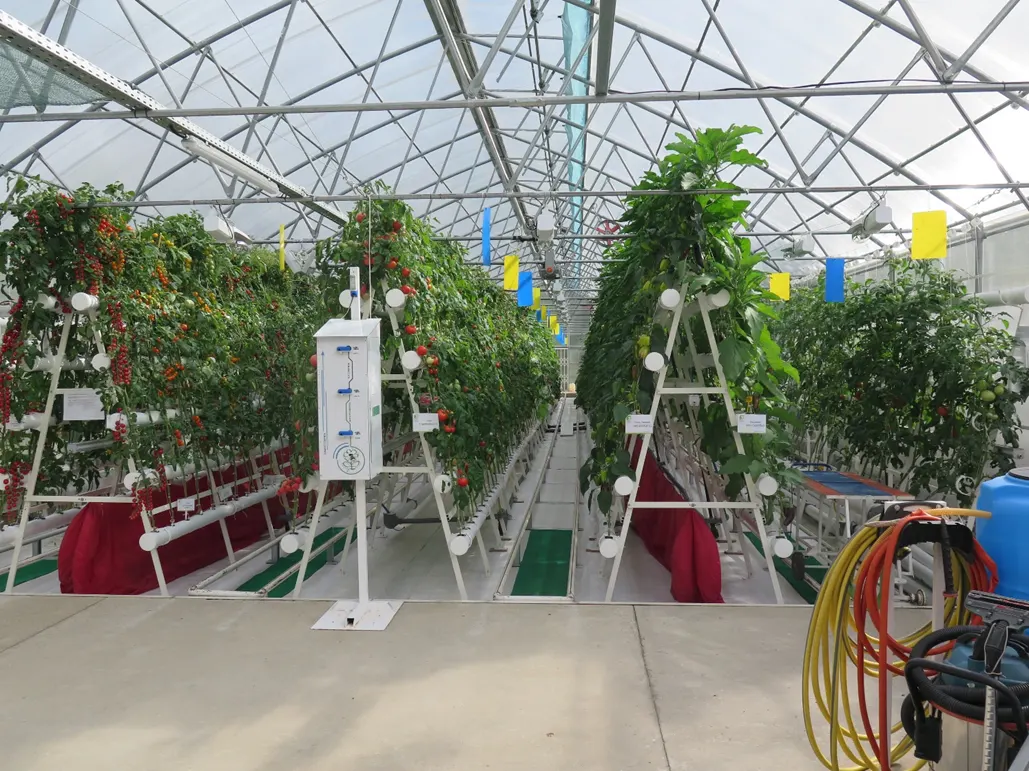
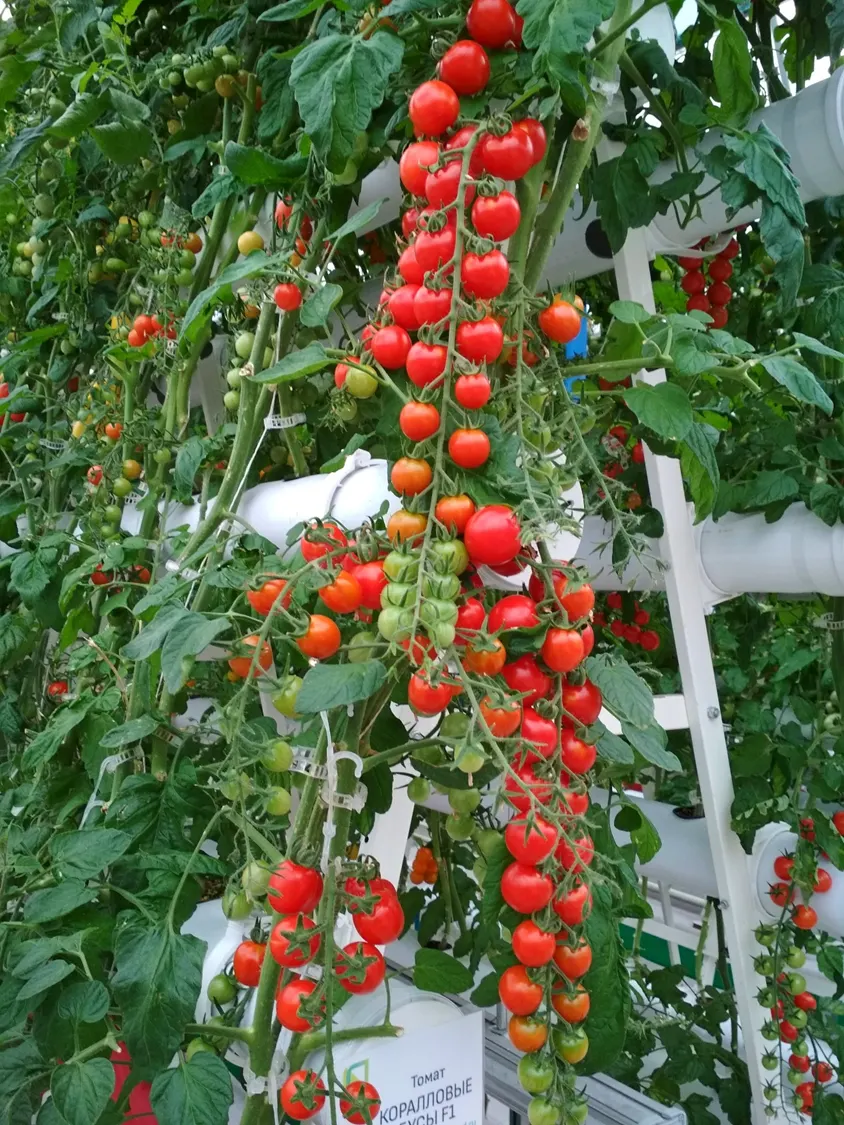
- An innovative technology for growing a range of vegetables, lettuce, leafy greens, and berries on multi-tier “PHYTOPYRAMID” growing units, using a substrate-free, aero-hydro method. Multi-tier “Phytopyramid” growing units are the foundation of future technology! Stacking multiple tiers significantly increases the productivity of each unit of greenhouse floor area by placing a large number of low-growing plants on several levels. When growing tall plants, the multi-tier effect is lost, but without exception every plant responds with high yields to the unique root-feeding conditions.
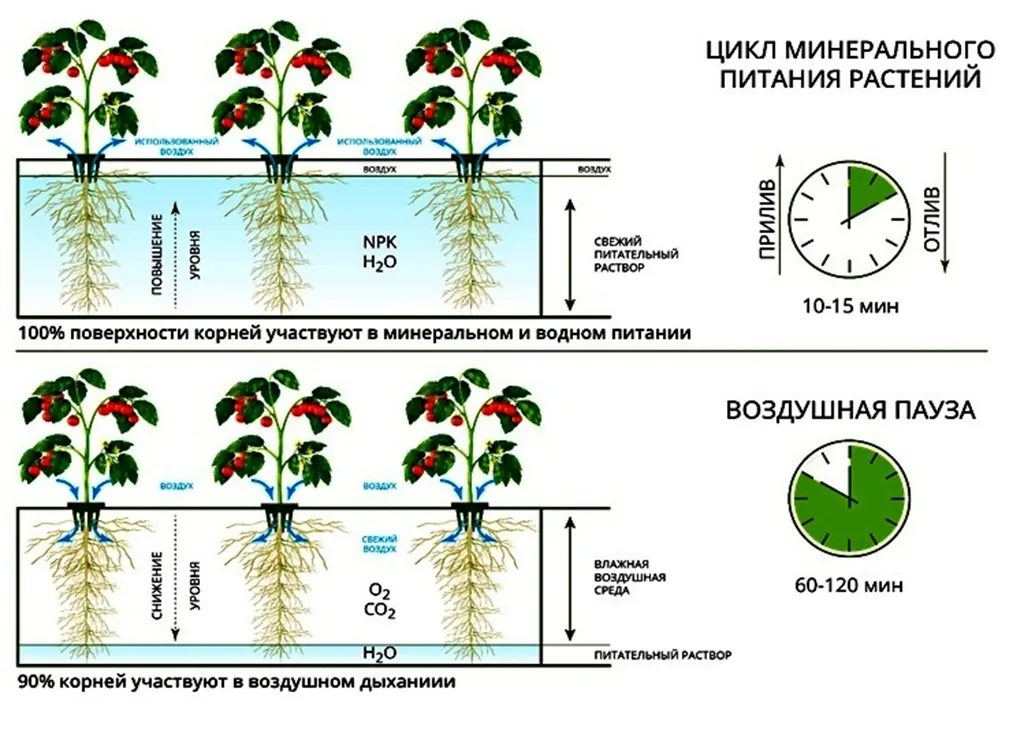
The foundation of the technology - root feeding Most of the time, the root system is not in a nutrient solution but in a moist air environment. The aeroponics effect is achieved with simple, reliable means. The maximum possible aeration of the root zone! Ideal conditions for the development of the root system and the plant itself!
Advantages of the “Phytopyramid” technology:
- Multi-tier stacking improves the use of greenhouse area and volume.
- The technology can grow a wide range of low-growing plants: determinate tomatoes, peppers, eggplants, zucchini, lettuce, strawberries, and others, as well as tall plants: indeterminate tomatoes, cucumbers, watermelon, melon, and others.
- No substrate is used, saving on its purchase, logistics, and disposal.
- The entire nutrient solution is used in a closed loop. No loss of expensive fertilizers or water. Economics:
- Lower production cost.
- No dependence on imported consumables
- Reduced logistics costs. Environmental friendliness:
- No fertilizer discharge into drainage.
- Nitrate content in the fruit is 5-12 times below the MPC. The product is suitable for dietary and baby food.
Small-volume hydroponics - the mainstream technology Small-volume hydroponics:
- Requires a substrate (mats, bales, cubes, and others).
- Costs for purchasing, transporting, and disposing of the substrate.
- The plant stays in the greenhouse for a long period.
- Over this time, the plant is exposed to numerous adverse factors that affect the harvest.
- Requires high-yield hybrids resistant to a range of diseases, which raises seed costs.
- A minor process upset leads to a significant loss of harvest.
- Loss of water and fertilizer with the drainage.
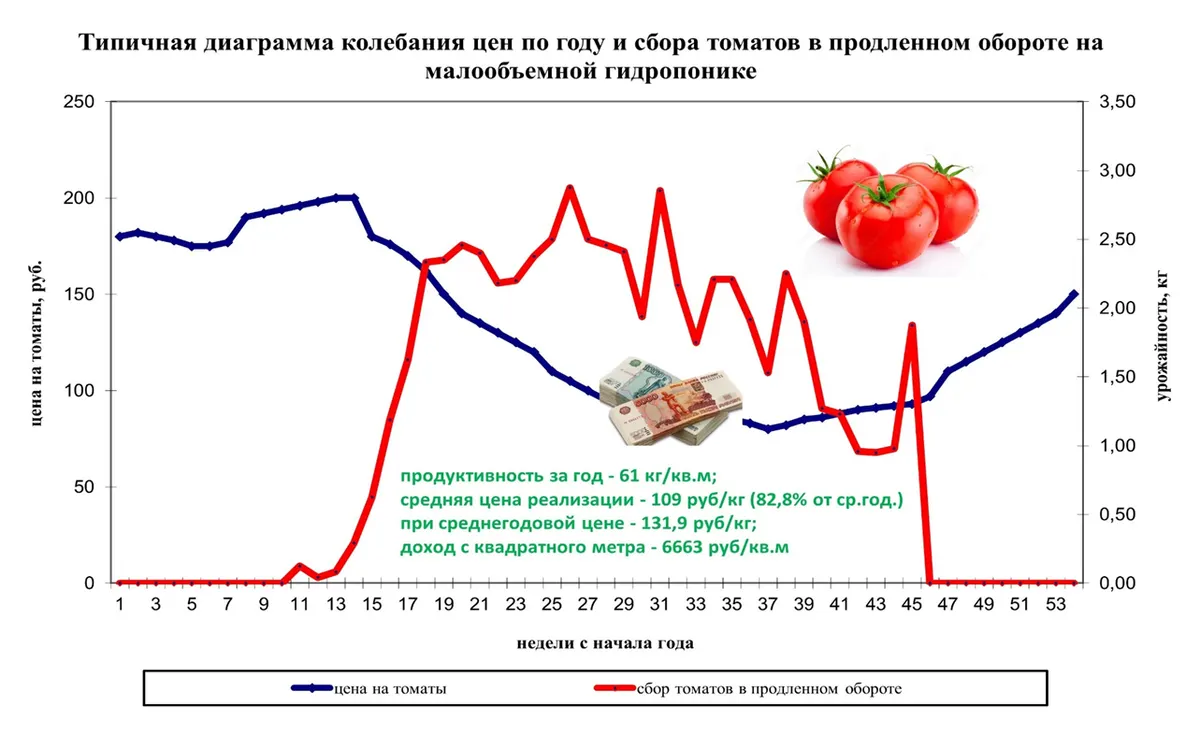
The main harvest falls in a period of low selling prices!
 Technology can and must evolve!
One of the innovative ones is “PHYTOPYRAMID”
Technology can and must evolve!
One of the innovative ones is “PHYTOPYRAMID” - Several crop cycles a year on “Phytopyramids” will significantly outperform the yield and profitability of operations using traditional small-volume hydroponic technology!
- The ability to apply various organizational growing schemes, flexibly changing growing periods and the number of crop cycles depending on regional conditions and the chosen strategy. The ability to get an ultra-early and a late harvest with uniform ripening and sales at the highest market price!
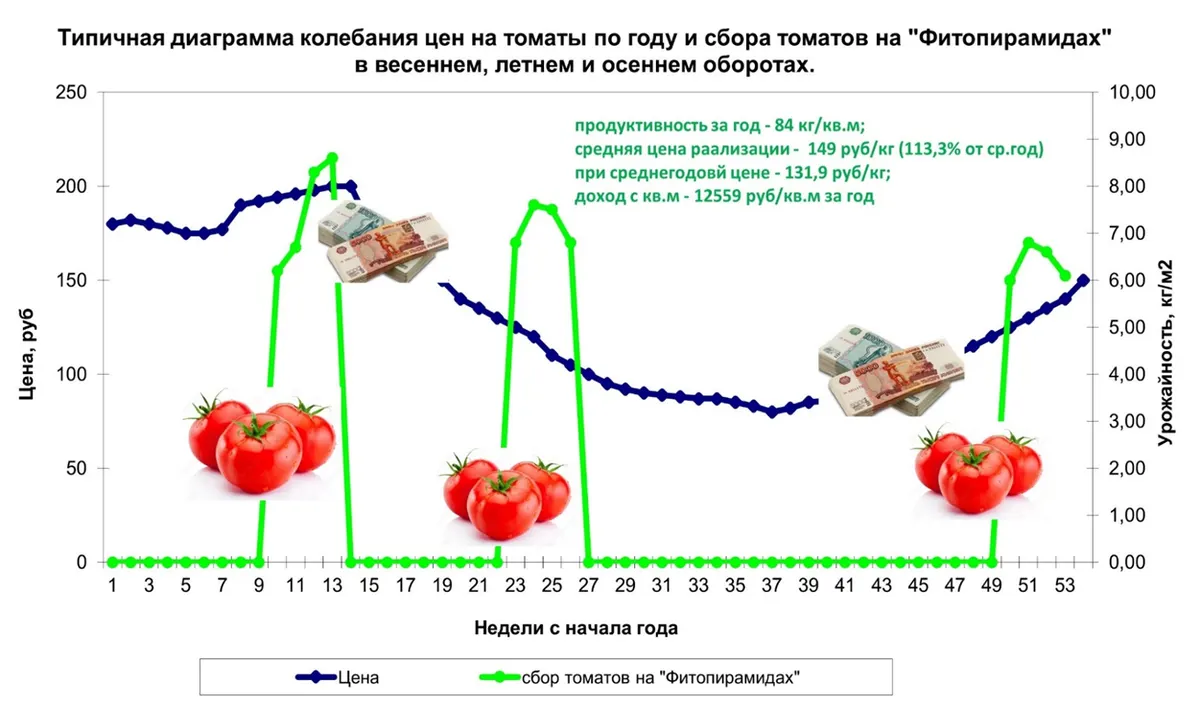
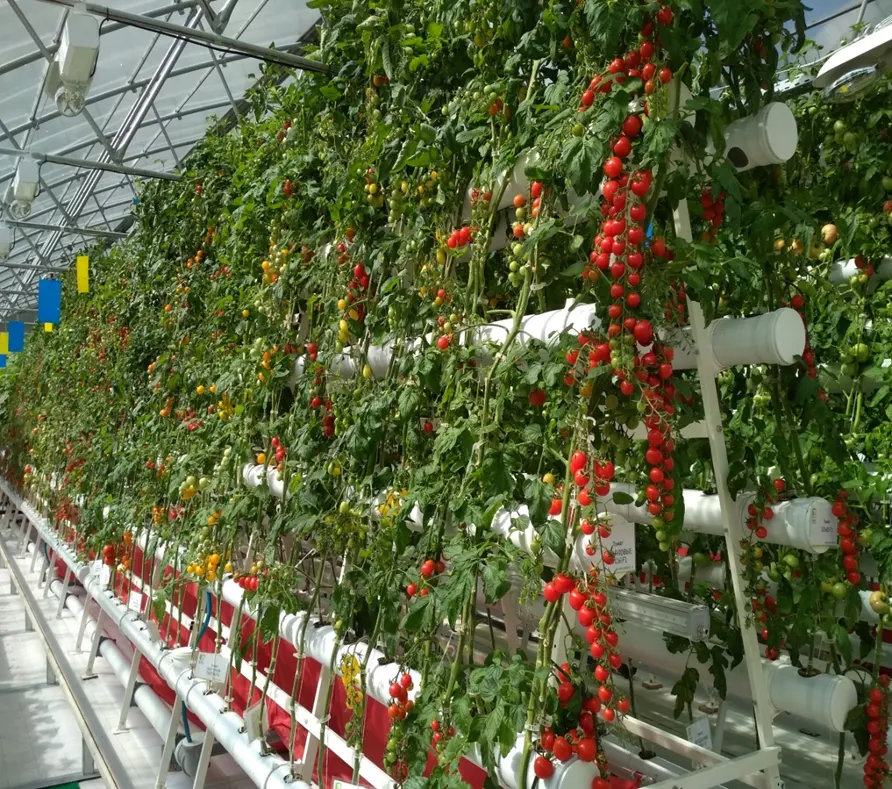
On “Phytopyramids” we grow money, not just kilograms
- We build what is effectively a tall tomato plant out of low-growing ones placed on several tiers. The growth and development rate of determinate hybrids is significantly higher than that of indeterminate ones.
- The first truss forms earlier, and later ones form more often. An ultra-early harvest with uniform ripening in a period of high selling prices.
- Grown quickly, harvested quickly, and the units “recharged” for the next cycle.
- Heating costs are on par with greenhouses using other technologies. The heating period is shorter.
- Production cost is significantly lower.
Simple Solutions - Reliable Operation
-
Our technology uses simple, reliable engineering solutions protected by invention patents.
-
The growing system is designed so that a complete emergency power outage, even for a full day, is not critical for the plants.
-
The equipment and components do not require large capital investment.
-
All components are domestically manufactured.
-
“Phytopyramid” growing units integrate easily into different types of greenhouses!



Advantages of the technology
-
Up to 4-5 harvests a year for the main vegetable crops. Plants suited to multi-tier systems: The “Phytopyramid” technology delivers the maximum vegetable yield per unit area in the shortest time - from 2 weeks to 3 months from the day of transplanting, depending on the plant species.
-
Tomato
-
Eggplant
-
Sweet pepper
-
Cucumber
-
Strawberry
-
Lettuce
-
Determinate tomatoes: 4-5 tiers Planting density: 11.4-14.25 plants per m² Transplanting: 14-16 days after germination Harvest start: 55-65 days after transplanting to the PP
-
Indeterminate tomatoes: 1-2 tiers Planting density: 2.85-5.7 plants per m² Transplanting: 14-16 days after germination Harvest start: 60-70 days after transplanting to the PP
-
Cucumber: 1 tier Planting density: 3.1-3.4 plants per m² Transplanting: 10-14 days after germination Harvest start: 18-22 days after transplanting to the PP
-
Eggplant: 4-5 tiers Planting density: 7.5-9.33 plants per m² Transplanting: 20-25 days after germination Harvest start: 45-50 days after transplanting to the PP
-
Sweet pepper: 4-5 tiers Planting density: 7.5-9.33 plants per m² Transplanting: 20-25 days after germination Harvest start: 50-65 days after transplanting to the PP
-
Garden strawberry: 5-7 tiers Planting density: 15.5-22 plants per m² Transplanting: 15-20 days after Frigo seedling wake-up Harvest start: 30-35 days
-
Lettuce and leafy greens: 7-8 tiers Planting density: 34-42 plants per m² Transplanting: 14-15 days after germination Harvest: 14-16 days after transplanting
Closed systems - ideal conditions for maximizing plant potential “PHYTOPYRAMID”:
- Versatility that allows growing the main vegetable crops: cucumber, tomato, eggplant, pepper, lettuces, leafy greens, and other crops, unlike rack systems.
- Structural simplicity compared with rack systems.
- Good ventilation of the plant canopy.
- The option to use combined LED + HPS lighting.
- Plants receive highly effective side lighting.
- Easy servicing of the lighting equipment, transplanting, plant care, and harvesting.
- High manufacturability.
Different climate zones - one result! Excellent!
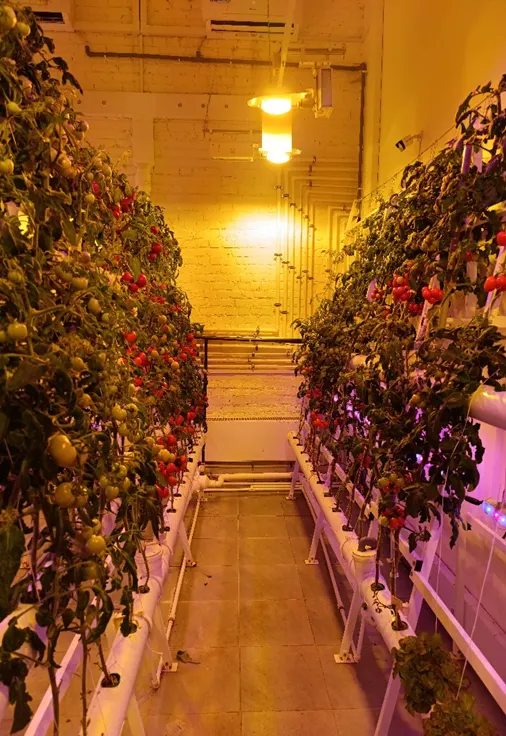
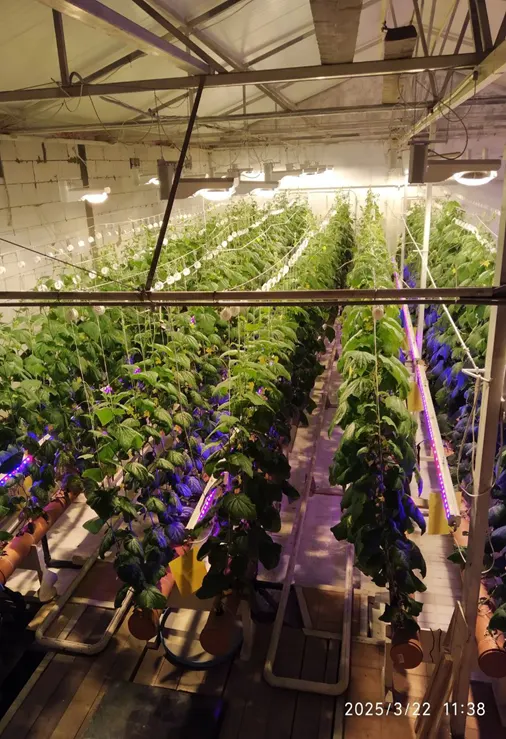
- Moscow
- Kazan
- Grozny
- Dubai, UAE
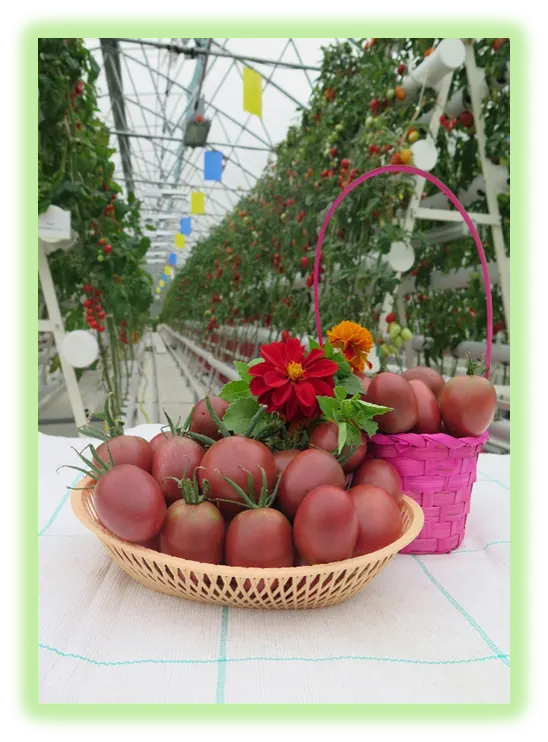
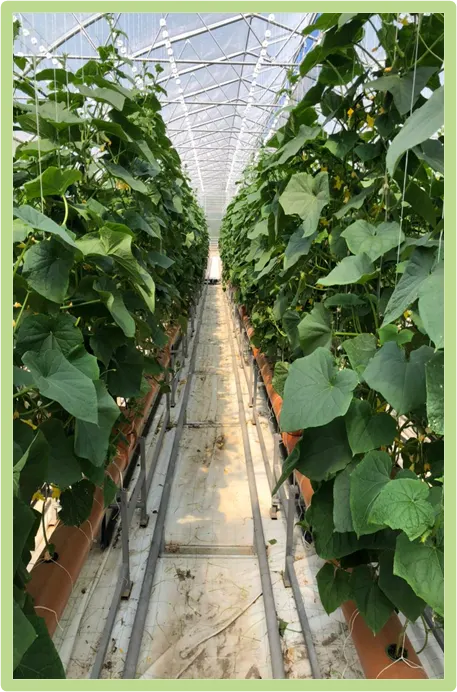
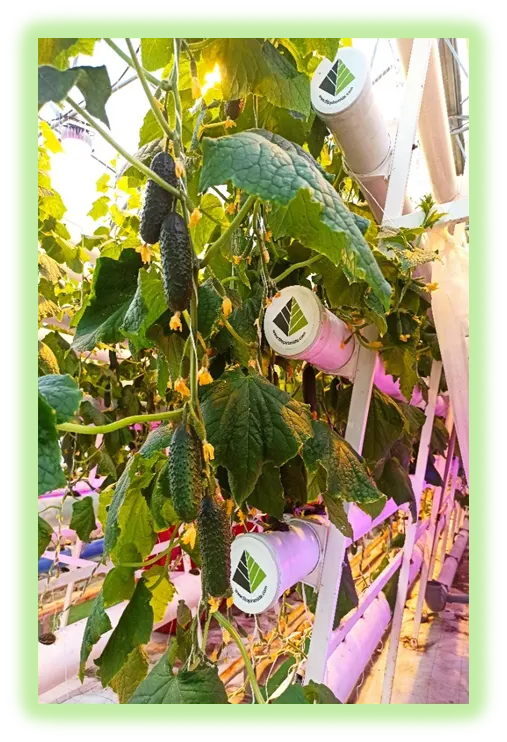
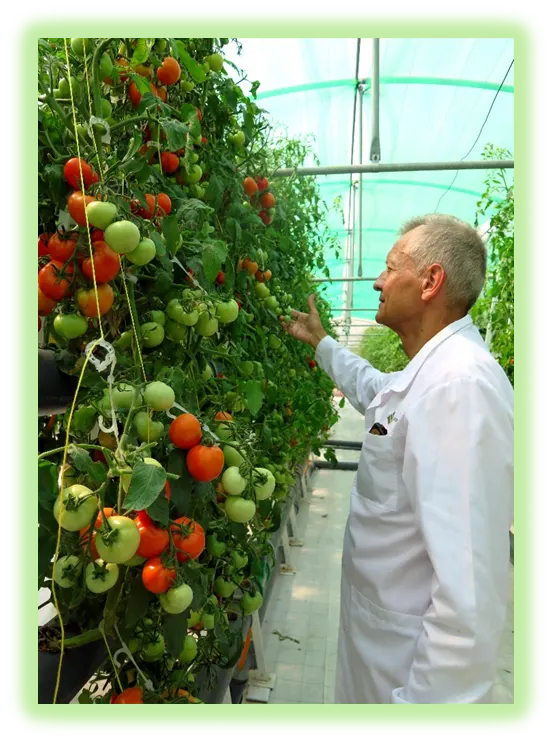
- Products for health and longevity. Increased root aeration drives a high metabolic rate in the biological processes taking place in the plants, prevents nitrate buildup, blocks root diseases, supports fast growth and development, boosts yield, and significantly improves the product’s nutritional value. The product comes out environmentally clean and can be recommended for dietary and baby food!
Get a quote
Send us a drawing or a photo of the part. We will work out the process, the plant configuration and the price.