






AKU-ECOLOGY Unit
- Modern Technologies KZ LLP has built the AKU/30-ECOLOGY unit. This equipment is designed for effective ballast water treatment, ensuring compliance with environmental standards. The treatment process includes drawing in ballast water, treating it using the AKU/30-ECOLOGY unit’s technology, and then collecting samples for quality control. Laboratory analysis of the treated water confirms the unit’s effectiveness and allows its power and throughput parameters to be optimized under real operating conditions. In this way, the project is aimed at deploying and operating a proven ballast water treatment technology using the AKU/30-ECOLOGY unit. AKU-ECOLOGY units are integrated solutions for treating and disposing of a wide range of organic waste, which further underlines their environmental focus and versatility.
Main function of the units: Disinfecting liquid media containing biological waste. They effectively neutralize hydrogen sulfide, ammonia, and urea, eliminating unpleasant odors. At the same time, pathogenic microorganisms are destroyed in both the liquid and solid phases of the waste. The technology delivers deep processing. Waste treated within seconds becomes safe for disposal. It can also serve as feedstock for producing liquid or solid organomineral fertilizers, as well as fuel briquettes. The units have a broad range of applications. They are used to disinfect municipal sewage, waste from portable toilets, manure, and litter. The units are also effective for treating toxic waste of plant and organomineral origin, “treating” soils, and rehabilitating water bodies. In this way, AKU-ECOLOGY turns hazardous waste into useful resources, helping to solve environmental problems across various industries.
Ballast water: Ballast water is seawater taken into a ship’s dedicated tanks to maintain stability, maneuverability, and safe draft, especially on an empty voyage. Its main functions include:
- Improving seaworthiness.
- Adjusting list, trim, and draft during loading and unloading. The main environmental threat is linked to the transfer of invasive species . Along with the water taken on at the port of origin, bacteria, microbes, larvae, and algae enter the tanks. Their subsequent discharge in another region can disrupt local ecosystems. International regulation is carried out through the International Maritime Organization’s (IMO) Ballast Water Management (BWM) Convention. Since 2017, it has required:
- Compliance with the D-1 (open-sea exchange) and D-2 (treatment to set standards) standards.
- Installing certified ballast water treatment systems on ships.
- Carrying a management plan on board and keeping an operations log. Treatment technologies for neutralizing organisms include:
- Mechanical filtration.
- UV disinfection.
- Chemical treatment. In this way, the modern approach aims to minimize environmental risk through strict regulation and the use of dedicated technologies. To prevent organisms from being transferred with ballast water, treatment systems (filtration, UV, chemical treatment) are used, which can be replaced by treating the ballast water with the AKU-ECOLOGY unit.
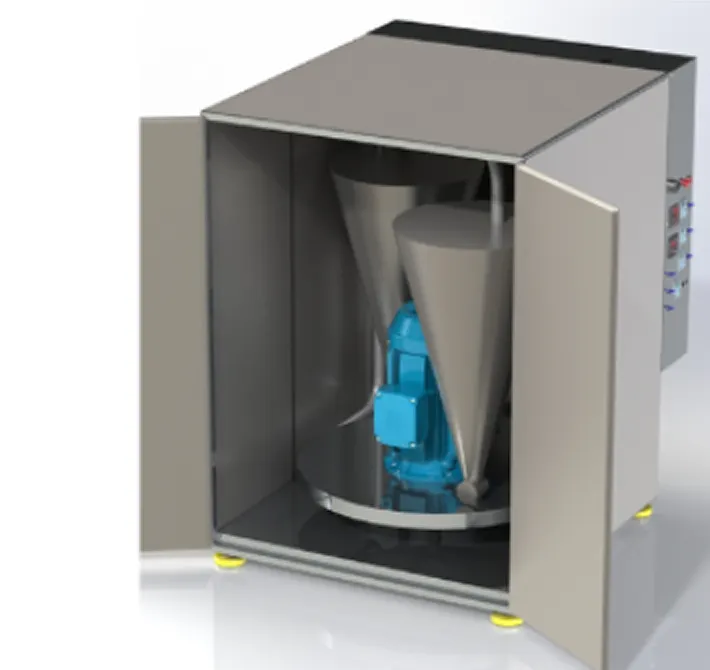
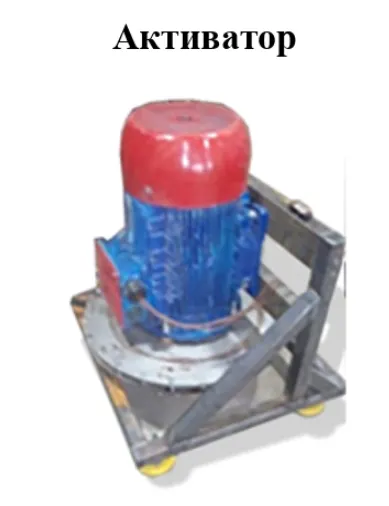
Structural description of how the AKU (cavitation utilization apparatus) works: Loading A sewage pump with a macerator feeds a batch of liquid biological waste (130-300 L/kg) into the loading tank. Cycle start The waste flows by gravity from the loading tank into the activator - the unit’s main working component. Treatment process Cavitation occurs in the activator: the liquid is bombarded with bubbles, creating a zone of high pressure and localized heating. Treatment result Pathogenic microorganisms are destroyed at the molecular level. Hydrogen sulfide, ammonia, and urea are neutralized, eliminating unpleasant odors. Solid particles are broken down to an ultra-fine (nano) fraction. Circulation The batch being treated flows through a bypass pipe into a second working tank, after which the “activator - working tank” cycle repeats the number of times set by the technology. Automation The entire process (treatment time, circulation, discharge) is controlled by an automatic control system. One cycle takes seconds. Discharge and continuity Once the required level of disinfection is reached, the batch is automatically discharged. A new batch of waste is immediately fed into the emptied loading tank, keeping the process quasi-continuous. The heart of the system The operating principle of cavitation technologies - the basis of the AKU (using UVET as an example): The key element is the activator, which generates cavitation. Drive The activator is driven either by an electric motor with soft, frequency-controlled start-up and electronic control, or by an internal combustion engine. Function The drive’s energy is converted into hydrodynamic processes that generate cavitation bubbles, which, as they collapse, produce the main cleaning and grinding effect.
Structural description of how the cavitation device works:
- Operating principle: The device uses a cold-boiling method based on cavitation acting on the liquid.
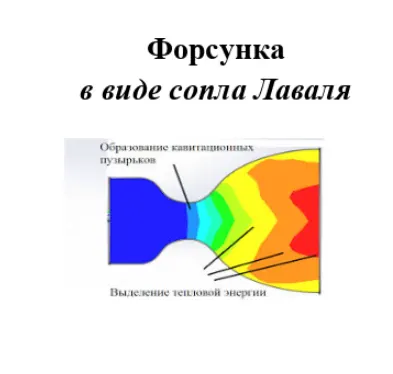
- Key element: Special nozzles play the active role, with internal channels shaped as a Laval nozzle.
- Location: These nozzles are mounted on the activator’s rotating disc.
- Nozzle design: A specially profiled gas channel with a constriction is what matters most, designed to change the speed of the liquid passing through it.
- Compression process: Under pressure, the liquid enters the nozzle at high speed. In the narrow part of the channel, it is sharply compressed and energy accumulates.
- Cavitation formation: As it exits the constriction, the compressed liquid releases its energy, instantly forming a multitude of cavitation bubbles.
- Bubble implosion: As they move away from the narrow section, the bubbles begin to collapse (implode).
- Implosion effect: At the moment of collapse, micro-explosions occur with local pressure of up to 1,000 atmospheres and a temperature of about 6,000°C.
- Heat accumulation: Thanks to continuous circulation and pumping of the liquid through the nozzle, the thermal energy from these micro-explosions builds up in the volume of liquid.
- Result: The combined effect of millions of cavitation implosions produces significant heating of the working medium.
AKU-ECOLOGY units with electronic control and soft start, in various power ratings:
Name (AKU 11…315 with electronic control and soft start, various power ratings);Volume of liquid feedstock processed, cubic meters per hour AKU-11 (11 kW);6 AKU-18.5 (18.5 kW);10 AKU-22 (22 kW);12 AKU-30 (30 kW);15 AKU-37 (37 kW);19 AKU-90 (90 kW);45 AKU-160 (160 kW);80 AKU-200 (200 kW);130 AKU-250 (250 kW);160 AKU-315 (315 kW);200
Get a quote
Send us a drawing or a photo of the part. We will work out the process, the plant configuration and the price.